Duct Leakage Can Cost You a Lot
The energy penalty from duct leakage is often much larger than the percentage of air being lost. Here's what decades of research reveal about duct location, climate, and the real cost of leaky ductwork.

More Building Science


For those of us who heat and cool our homes with forced-air systems, duct leakage can matter a lot. I say “can” because as with most things in building science, it depends. For this article, I’m focusing on ducts that are in unconditioned spaces: an attic, crawlspace, basement, or garage.
When those ducts leak on the supply side, you’re losing expensive air. You paid to heat or cool it, and now it leaks out before getting to your living space. When they leak on the return side, they suck in unconditioned air that costs more to heat or cool. Return leakage also reduces the heating and cooling capacity of your system. Let’s look at three factors that make the most difference (besides getting the ducts into conditioned space, that is).
Duct-system efficiency
Imagine your air handler pulls 1,000 cubic feet per minute (cfm) of air into the return ducts but only 900 cfm comes from the house. The rest is unconditioned air pulled into the ducts. Of the 1,000 cfm that goes through the air handler, let’s say another 10 percent, or 100 cfm, leaks from the supply ducts before making it to the registers.
That ain’t good! But it was typical before building codes mandated duct-leakage testing. How much do you think that leakage would affect your overall duct-system efficiency? How about your overall heating and cooling bills? Or comfort? Or indoor air quality? The answers may surprise you—the efficiency penalty is nearly double what you’d expect. And comfort and IAQ also take a hit.
On the heating and cooling side, duct-system efficiency is one way to characterize it. This calculation factors in how much of your heating and cooling energy gets lost in the duct system. The efficiency of your equipment (whether measured in SEER, AFUE, HSPF, or something else) is not included. The duct-system efficiency factors in not only duct leakage but also the thermal penalty of adding unconditioned air through return leaks and thermal conduction through the ducts and their insulation.
The results I’m showing in this article are from two research papers two to three decades ago. You can find the links to them below.
Where are the ducts?
One of the most important factors is the location of the ducts in the house. If they’re in conditioned space, the negative impact is minimal. But put them in an attic that gets up to 130°F (54°C) or so, and you’ll pay a heavy price for cooling. In Miami or Phoenix, for example, the duct-system efficiency for 10 percent leakage each in the return and supply ducts gets you an overall efficiency of, not 80 percent, but about 70 percent. The reason for the difference is that duct-system efficiency includes a variety of factors, as mentioned above.
That’s from a 2001 paper by Iain Walker at Lawrence Berkeley National Lab (LBNL), and I’m looking at duct insulation of R-6 or R-8. If your ducts have less insulation, the results are even worse. Here’s the full table that I pulled those numbers from.
![The effect of duct leakage on heating and cooling for ducts in attics in 6 cities. [Source: Iain Walker 2001 paper]](https://www.energyvanguard.com/wp-content/uploads/2026/05/duct-leakage-table-iain-walker-2001.png)
When you’re cooling with 10/10 duct leakage (10 percent leakage on each side) in a basement or vented crawlspace, there’s a huge difference. The duct-system efficiency is now 86 to 90 percent for Miami and Phoenix. Basements are similar, although there are few basements in those two cities. Also, 5/5 duct leakage does a little to help, but not much. The range then would be 91 to 93 percent.
The story for heating is similar. Ducts in an unconditioned attic perform the worst.
Where is the house?
Another important factor is climate. The best place to put ducts in the attic is Seattle, according to the Walker paper. Of course, you don’t need much cooling there, and until recently almost no one had cooling systems. But even in Seattle, the duct-system efficiency is less than 80 percent with those 10/10 ducts in the attic. Put them in a crawlspace or basement and you get a 10 to 15 percent boost.
For heating, climate plays a larger role. With ducts in the attic in Miami, you still can get more than 80 percent system efficiency with 10/10 ducts. In Minneapolis, however, you’re down in the low 70s. Reduce the leakage to 5 percent on each side, and now Miami gets a bump to the mid-80s percent system efficiency. And Minneapolis is now about 80 percent.
Put the ducts in the crawlspace or basement, and now you’re 84 to 90 percent for the 10/10 duct leakage for all the cities in Walker’s study. With 5/5 duct leakage, now you’re 88 to 92 percent. Here’s a chart showing the cooling results for ducts in the attic with 5/5, 10/10, and 14/14 leakage in six cities.
![The effect of duct leakage on cooling for ducts in attics. [Source: Iain Walker 2001 paper]](https://www.energyvanguard.com/wp-content/uploads/2026/05/duct-leakage-cooling-iain-walker-2001.png)
How leaky is the house? And how do the ducts leak?
Now let’s look at a different research paper. This one‘s from the Florida Solar Energy Center (FSEC). I’ve already written about the MAD AIR work that John Tooley and Neil Moyer did in the 1980s. This was a follow-up project they did with James Cummings and Rico Dunsmore.
When you have ducts outside the conditioned space, it’s likely you’re also making the air leakage in the house worse. And that’s what they quantified in this study. Perhaps the most important finding was this: When the air handler was running, the infiltration rate for the house was four times higher than when the air handler was off.
So not only does duct leakage hurt you in the ways I talked about at the beginning of the article, it also dramatically increases infiltration. And the reason for that is lack of balance. When you have more return than supply duct leakage, it creates a positive pressure in the house. When supply leakage is higher than return, the house goes negative. Both drive air leakage, which I explained in detail here.
The sum and substance
These results may be from a few decades ago, but they still have a lot of relevance. Yes, houses built to the stricter codes of the past 15 to 20 years should perform better, but it depends on how well the codes were enforced. Also, far more houses were built before the code improvements than since. And plenty have leaky ducts in attics with R-4.2 insulation, or worse.
The big takeaway is that leaky ducts, especially those in unconditioned attics, result in bigger losses than just the percentage of lost airflow. And then there are the other problems. You’re likely to be less comfortable, and you may end up with worse indoor air quality.
As I said earlier, the best place for ducts is in the conditioned space. As the results above show, a vented crawlspace is a better place for them than an unconditioned attic. But then you have all the nasty, damp air that can get pulled in through return leakage (sometimes right next to a dead possum) and also send your system to the dump faster (photo below). So encapsulate that space and make it semi-conditioned.
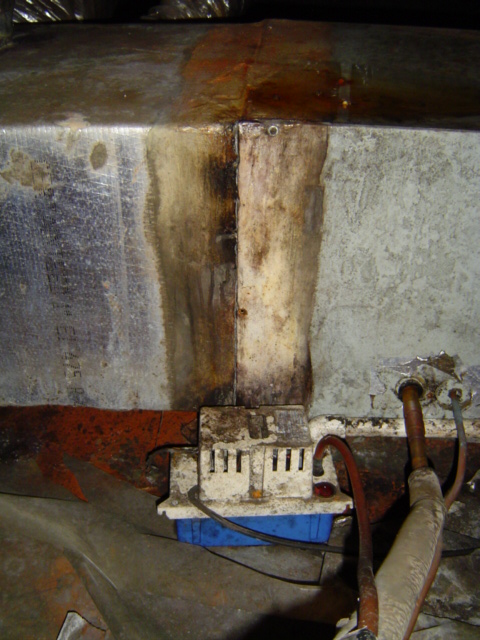
Ducts in a basement perform even better. If the space is clean and dry, you don’t have the problems that crawlspaces create.
The bottom line is that duct leakage for ducts in an unconditioned attic could be costing you more than you think. Get your ducts tested. Get them sealed. Get them insulated. And get them out of an attic if you can.
Hat tip to Steve Antonini for asking me about this topic recently.
Allison A. Bailes III, PhD is a speaker, writer, building science consultant, and the founder of Energy Vanguard in Decatur, Georgia. He has a doctorate in physics and is the author of a bestselling book on building science. He also writes the Energy Vanguard Blog. For more updates, you can follow Allison on LinkedIn and subscribe to Energy Vanguard’s weekly newsletter and YouTube channel.
Weekly Newsletter
Get building science and energy efficiency advice, plus special offers, in your inbox.