Why Did My Water Heater Energy Use Rise?
A two-year spike in energy consumption pointed to a dirty filter and coil, but a closer look revealed another contributing factor

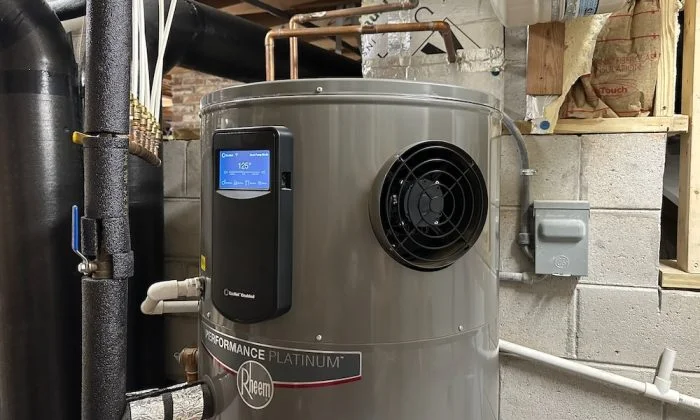
As I’m sure you do, I track my energy use at home. I’ve got a spreadsheet with the data from all of my electricity bills since we moved into this house in 2019. I also track individual parts of my home energy use. And that’s how I know I had a huge rise in energy use for my heat-pump water heater in 2024 and 2025. We’re back to normal this year—and may even end up with our lowest annual energy use so far—but what caused that rise?
The graph below shows the annual energy use of my heat-pump water heater. The 2026 column, though, includes an estimate for the last four months of the year. We had a slow rise going on from 2020 to 2023. Then in 2024 our energy use was 89% higher than it was in 2020. And 2025 was also abnormally high. What happened?

A likely suspect
If you’ve been reading this blog for two years or more, you may remember a big project I undertook in 2024. Beginning in February of that year, I gutted and remodeled my basement. The air was filled with dirt and dust and particulates and probably other airborne filth. And I didn’t always remember to cover and turn off the water heater.
For a regular electric or gas water heater, that doesn’t matter so much. But a heat-pump water heater gets its heat from the indoor air. When the air is dirty, the filter gets dirty. And as I discovered, the coil and other components can get dirty too. Here’s a photo of the filter in January 2025.

And here’s what it’s supposed to look like.
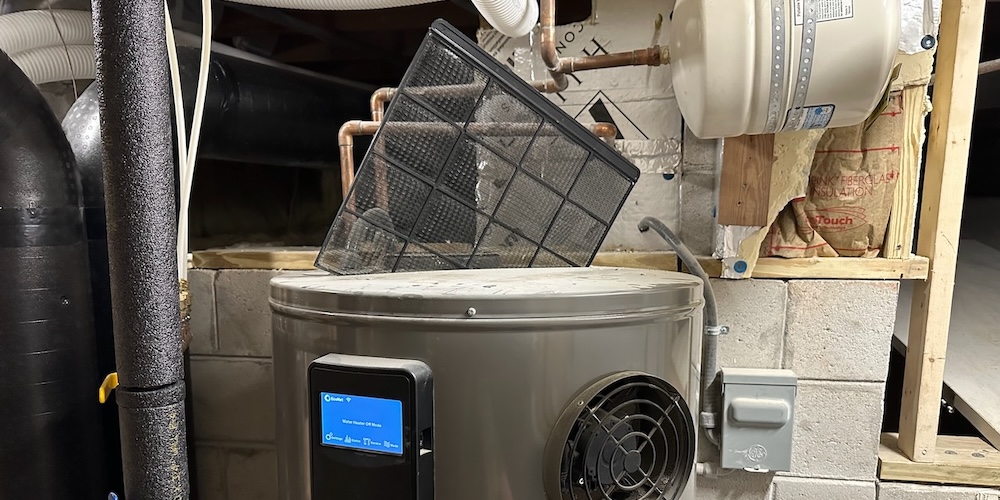
So were the dirty filter and heat-pump coil responsible for the high energy use of the water heater in 2024 and 2025? It seems likely, doesn’t it?
Monthly energy use data
Before jumping to conclusions, though, we need a more granular look at the data. The graph below shows the monthly data for our heat-pump water heater.

From 2020 through mid-2023, the energy use was pretty regular. It was high in the winter, at about 60 kilowatt-hours (kWh) per month, and low in summer, at 20 to 30 kWh per month.
When I graphed these data recently, the huge drop in the middle of July 2025 stood out to me. That wasn’t long after I cleaned the coil in the heat-pump water heater (video below). That had to be it. Right?
But already I see a problem with blaming the renovation for the extra energy use. Notice the steep rise at the end of 2023. The renovation didn’t begin until February 2024. Hmmm.
The primary reason
OK, I need to say more about what was going on in our house starting in August 2023. My stepson, who prefers baths to showers, moved in with us then and stayed for two years. Then he moved out at the end of July 2025. Also, I cleaned the coil in the water heater in April 2025 three months before the big drop in July. The graph below is the same one I showed above but with annotations.

The jump in energy use began when my stepson moved in and then went back to normal after he moved out. I’m sure the dirty filter and coil had an impact on the energy use. I really wanted that to be the primary cause. But the jolt in energy use those two years actually was caused by both things. I can’t fully disentangle the two without knowing the monthly hot water use as well as the energy data.
Also, there’s another contributing factor I haven’t mentioned yet. Yes, the renovation made things worse by getting the filter and coil dirty. But it also made things better by putting the heat-pump water heater into fully conditioned space. Before the winter of 2024-25, we didn’t have heat in the basement. So the higher ambient air temperature near the water heater made it more efficient. Without that, the peaks from November through January that winter would have been higher.
The extra energy use from the dirty filter and coil had to be significant, especially when the filter was clogged with drywall dust as you see in the photo above. So if you have a heat-pump water heater, here are some ways to keep it operating efficiently:
- Turn off and cover the water heater during dust-making events like remodeling.
- Upgrade the filtration.
- Check the filter regularly and clean it when necessary.
- Clean the heat-pump coil and other components when they get dirty.
Oh, and monitor your energy use. It can tell you a lot.
Allison A. Bailes III, PhD is a speaker, writer, building science consultant, and the founder of Energy Vanguard in Decatur, Georgia. He has a doctorate in physics and is the author of a bestselling book on building science. He also writes the Energy Vanguard Blog. For more updates, you can follow Allison on LinkedIn and subscribe to Energy Vanguard’s weekly newsletter and YouTube channel.
Weekly Newsletter
Get building science and energy efficiency advice, plus special offers, in your inbox.


