Spray foam basement insulation

Hi, I live in mid-coast Maine in a new build that is less than two years old. I want to insulate the concrete basement walls and air seal the rim joists. I missed a large rebate from Efficiency Maine that would have helped me use rigid board insulation and stay within my budget. However, I recently received a very reasonable quote to insulate the basement with spray foam instead, especially since the Maine rebate is lower now.
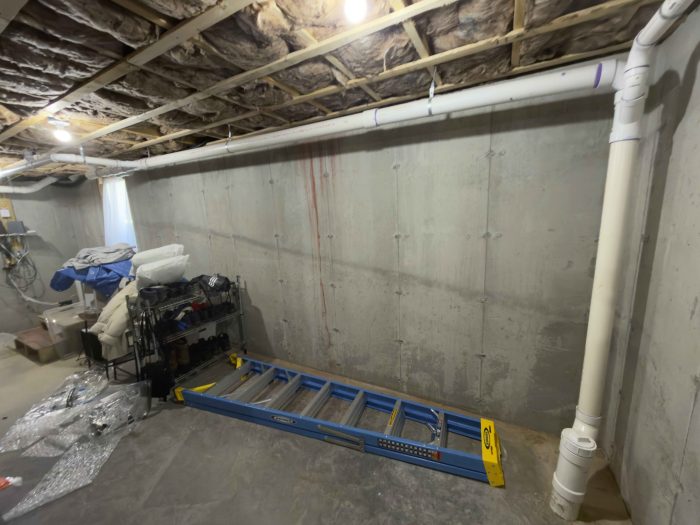
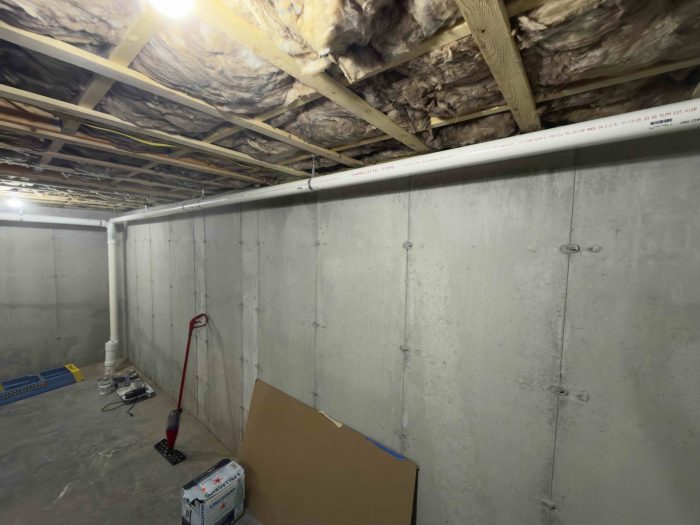
What are the cons of using spray foam? I realize accessing the walls later could be an issue, but the basement will only be used for storage and the space is unheated. Our first winter in Maine was very cold, and the basement got close to 32 degrees. I just want to raise the temperature so I don’t have to worry about pipes freezing, and to avoid drawing so much energy from the upstairs heating. I have attached 2 pictures of the space to be insulated.
Any insight will be appreciated.
Thank you,
Bill
GBA Detail Library
A collection of one thousand construction details organized by climate and house part

Replies
Bill,
Make sure to take into account the cost of applying the required thermal barrier to the foam. That is typically either drywall, or an approved intumescence coating.
Whether you use spray foam or foam board, I'd consider framing stud walls several inches from the concrete at the same time as you insulate, to make any future renovations easier.
Thank you Malcolm for your response. Yes, the proposal includes the intumescence paint (code here in Brunswick). In my case, I won’t be framing the basement at 73 just happy with a non freezing room for storage.
Just trying to research as much as possible before I make a decision on spray foam. Concerns are what if I need to repair the cement wall at some point, how does that work with the foam.
Thanks again for the reply.
Bill,
It does mask cracks in the concrete if they develop, but so do all other methods of insulating, which hide the wall from visual inspection. The spray foam itself doesn't preclude fixing any problems though.
The big worry with spray foam installations is problems with the mix, which can result in persistent chemical odors. That are rare, but can be devastating, leaving the house uninhabitable. However even if that did occur, removal would be relatively straightforward in your case. It's when it is in framed cavities, where remediation is both difficult and disruptive, that you run into the really bad situations. I'm not generally a proponent of foam, but it sounds like it might be a good option for you.
Why is remove the spray foam in framed cavities in a basement more difficult? Seems like you'd just have the remove the framing too. Doesn't seem like a huge deal in a basement
kickstarter,
I meant cavities in rafters or walls, not basements. In those places it's difficult to remove, difficult to access, and because they are often enclosed by finished surfaces like drywall, disruptive of the house's interior.
Thanks again Malcolm, the odor was something I will question with the contractor and check on the warranty for such a situation. Cement wall moisture will be my other question.
Yes, my first choice was rigid foam but the price difference is around $4000 versus foam.
Bill,
$4K. That's nothing to sneeze at!
I’m curious, you mention a 4K difference in cost between spray foam and ridged. In my Ontario market, spray foam is always the most expensive insulation option. Are you being quoted closed cell or open cell?
Hi The quotes I had received for rigid foam were from $10-12000 USD, the Maine rebate before October 1 was about $6000, so my lowest proposal came to around $3800 with rebate taken. After an October install and rebate change my rigid foam bid then was $7300 out of pocket.
As to the type of spray foam(yes closed cell), here is the proposal specs: ACTIVITY DESCRIPTION
PPE - Spray Foam Materials - Spray Foam - Genyk Materials - Intumescent Coating Materials - Air Sealing - Basement Labor - SF Service - Energy Assessment Respirator cartridge, half/full face mask, protective suits.
ELITE 2.0 is a spray-applied, medium-density rigid polyurethane foam
insulation system, designed without ozone-depleting substances for a Zero
ODS footprint. Utilizing HFO technology, it boasts a Global Warming Potential
(GWP) of 1, representing a 99.9% reduction compared to the traditional HFCs
used in the industry. This product adheres to the International Code Council's
AC377 standard and achieves superior ratings in ASTM E84 fire tests. As a
high-performance insulation and air barrier, it is perfectly suited for both new
construction and renovation projects in residential and commercial settings.
Per Gallon - Intumescent Paint: A protective coating that expands when
exposed to heat, forming a char barrier to delay fire damage and enhance
structural safety.
TYTAN Professional Fire Block Extreme Foam Sealant 24 oz.
Application of closed cell spray foam insulation to designated areas as
specified below. This includes preparation, installation, and clean-up.
Location:Basement Box Sill & Foundation Walls
Thickness:2"
R Value:14
Technician (BPI #5068821) will perform a blower door test as a required part
of the energy and air sealing assessment, in line with Efficiency Maine
standards. This test assesses airtightness, identifies leak-prone areas, and
helps understand energy efficiency.
Efficiency Maine Rebate Rebate Applied
Thank you for your reply.
Bill
I would plan for around R12 with 2" of spray foam. Your code is likely requiring R15 though, so you're light either way. A thicker layer of spray foam would solve that though. Keep in mind also that it is *very* difficult to get a flat, even layer of spray foam, and this is more of an issue as the layer gets thinner. You want the *minimum* thickness of the spray foam to be whatever is planned in terms of R value, with thicker spots OK. You do NOT want an "average" thickness of whatever is planned, because you will get lower than expected performance doing that due to the way heat transfer works.
What R value was the rigid foam install quote? It's possible they were quoting R15, which would have been around 2.5" minimum (if using polyiso) up to about 3.5" (if using EPS), so they may have been quoting you more insulation in terms of R value compared with your spray foam quote. You might not be looking at an apples to apples comparison here.
Bill
Bill,
Thanks for pointing out to check the rigid foam estimate. The quote was for 2” thermax.
Weatherize the Basement - Wilbur's Woods $9,390.00( without rebate)
- Remove existing insulation in the rim joist
- Air seal penetrations and framing connections in the rim joist with canned spray foam
- Insulate the entire depth of the rim joist with mineral wool batt insulation, cut to fit on site
- Insulate the entire height of the foundation walls and rim joist with 2" Thermax rigid foam; - Thermax to be fastened with masonry pins and
sealed with canned spray foam and Thermax tape
I am guessing both are acceptable to Efficiency Maine in order to get the rebate.
The other Bill
2" thermax is R13, since it's polyiso. It's also rated to be left exposed, but it's not cheap material. Maine might still be on an earlier code that allowed R10 on basement walls, in which case either of your quotes is more than code minimum. R15 is really into the point of diminishing returns anyway, and I think they went to far when adopting that into the code.
Bill
Note that using just mineral wool in the rim joist area is not a recommended treatment. Mineral wool is vapor permeable, so it will allow basement moisture through to condense on the rim joist. You should have about half of your R-value as impermeable foam insulation against the rim and the other half can be fluffy. The rim joist should be treated just as any other section of wood framed wall.
Thank you Bill. I have a set of questions for the vendor now. And I had checked earlier this year with our local Brunswick code officer on spray foam or rigid foam and as long as I have the barrier on the spray foam it is accepted as well.
Appreciate all sharing their knowledge and taking the time to reply.
Bill
Thanks Peter, we are not going with that estimate. But thank you for sharing about the mineral wool issue.
Bill