Open Foundation Insulation Ideas
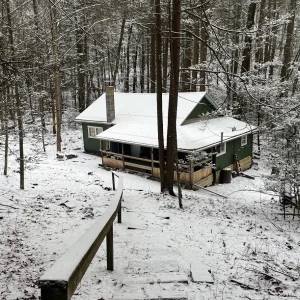
DIY homeowner here looking for some guidance on a 100 year old cabin, located in zone 6b near State College, PA.
Single story, 38’x20’ wood framed cabin sitting over an open foundation. We’ve had it for two years and I’m ready to figure out how to try and keep the floor a little warmer in the winter. Code isn’t an issue as it’s a recreational cabin. Just want it to be a bit more comfortable. Hadn’t been touched in decades, so it’s been a full rehab.
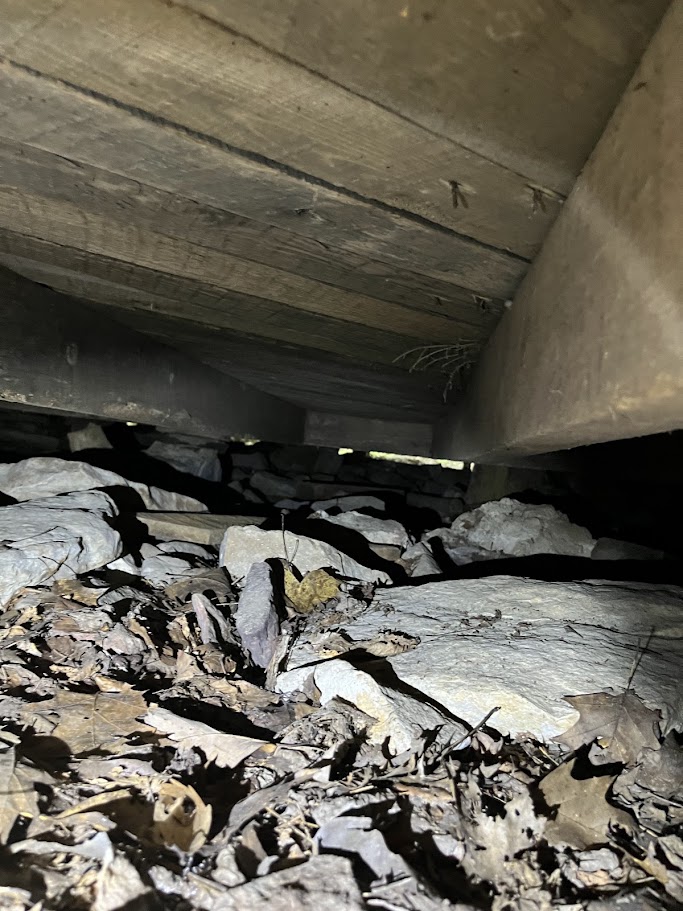
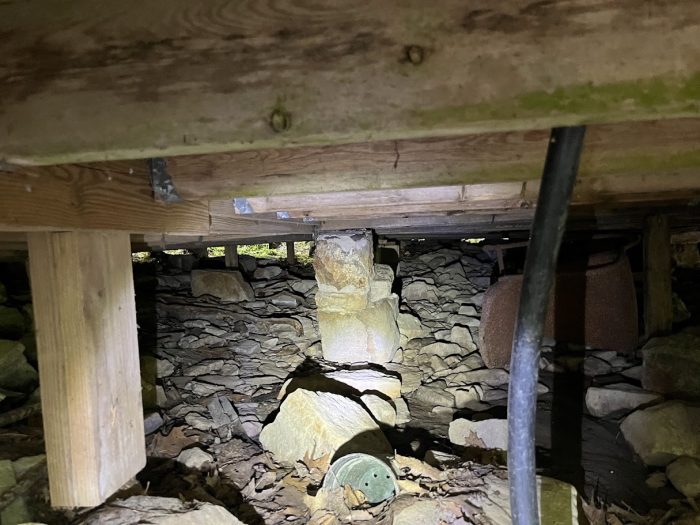
Floor joists are 2x6s at 30” O.C. running front-to-back, meeting at the 4×8 main beam running left to right. Floor is two layers of 1” yellow pine with maybe some thin layer of something in between. We then added an engineered T&G wood floor over that. Prior to adding the floor, I caulked and foamed all along the walls and any penetrations. The cabin is not drafty at all. No utilities under the floor. Not a ton of room to work as the ground slope takes clearance from about 30” down to 10” on the far side. However, that won’t prevent me from doing what needs done.
No humidity issues inside. Dehumidifier runs all the time as a precaution. Minisplit is the primary heat source in the winter, supplemented by a ventless propane wall heater when we need to warm things up a bit quicker. Wood fireplace on occasion. Heater runs at the minimum 60 degrees or so all winter. Limited sources of interior humidity and no signs of moisture issues inside. Composting toilet has a negative pressure fan that runs 24×7. No house plants.
I had some free 3.5” reclaimed paper faced polyiso, so I cobbled and spray foamed it between a few joists just to see how it worked. Seems like it’ll do the job but when we get the hot and high humidity days, condensation will form on the insulation. Seems like that’s not ideal, but wouldn’t that happen with any foam board? Also, cabin sits at the base of a mountain that gets water running down it with some good rains. No standing water, but the ground feels damp to moist.
So, here’s my preliminary plan.
-
Drains and diversions already installed on exterior to ensure no running water goes underneath and reduce ground moisture.
-
I’ve removed most of the rocks from underneath to try and make it smooth as possible for geotextile fabric followed by a 12 mil plastic. I can’t encapsulate, but figure this will limit the ground sourced humidity?
-
Spray Boracare with moldicide over entire underside
-
Insulate in some way that minimizes opportunities for moisture and mold damage. Animals have not been an issue.
So my questions?
Cut and cobble between joists sealed up nice and tight with spray foam. If this route, up against floorboards to just flush with the bottom of the joists? What about a wide spray of foam over the bottom of the joist to help with thermal bridging?
Foam board mounted underneath the joists where I can and cut/cobble where I can’t get a full sheet to fit?
Should both options above be covered with OSB or similar? Not sure how much protection is really needed.
Spray foam the whole thing?
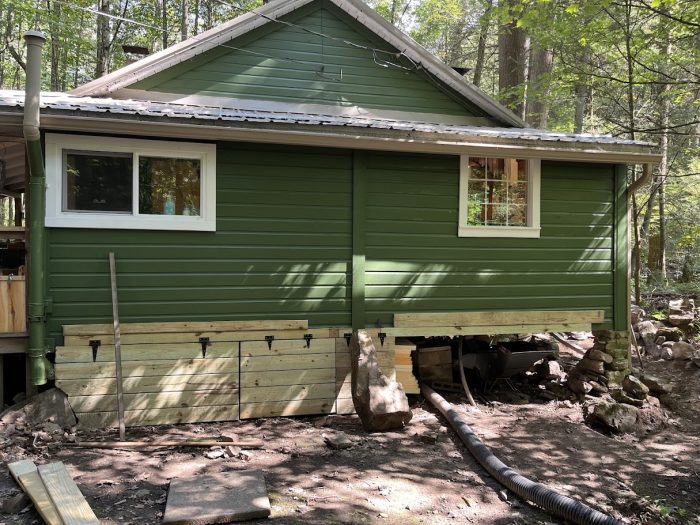
I also added some “skirting” on the side. More for looks than anything. Is it better to remove those to promote maximum airflow or does it not really matter? See pic.
I’ve done so much research, I can talk myself into or out of anything. I appreciate anyone willing to throw me some ideas to my specific situation
GBA Detail Library
A collection of one thousand construction details organized by climate and house part

Replies
Cc Spray foam the whole thing. 2 inches is probably fine and it’s a way better install and end product then cut and cobble, esp in areas that are difficult access. End product will be better