Thermal Break Assembly Process: Knurling, Strip Insertion and Rolling
Thermal Break Assembly Process: Knurling, Strip Insertion and Rolling
Introduction
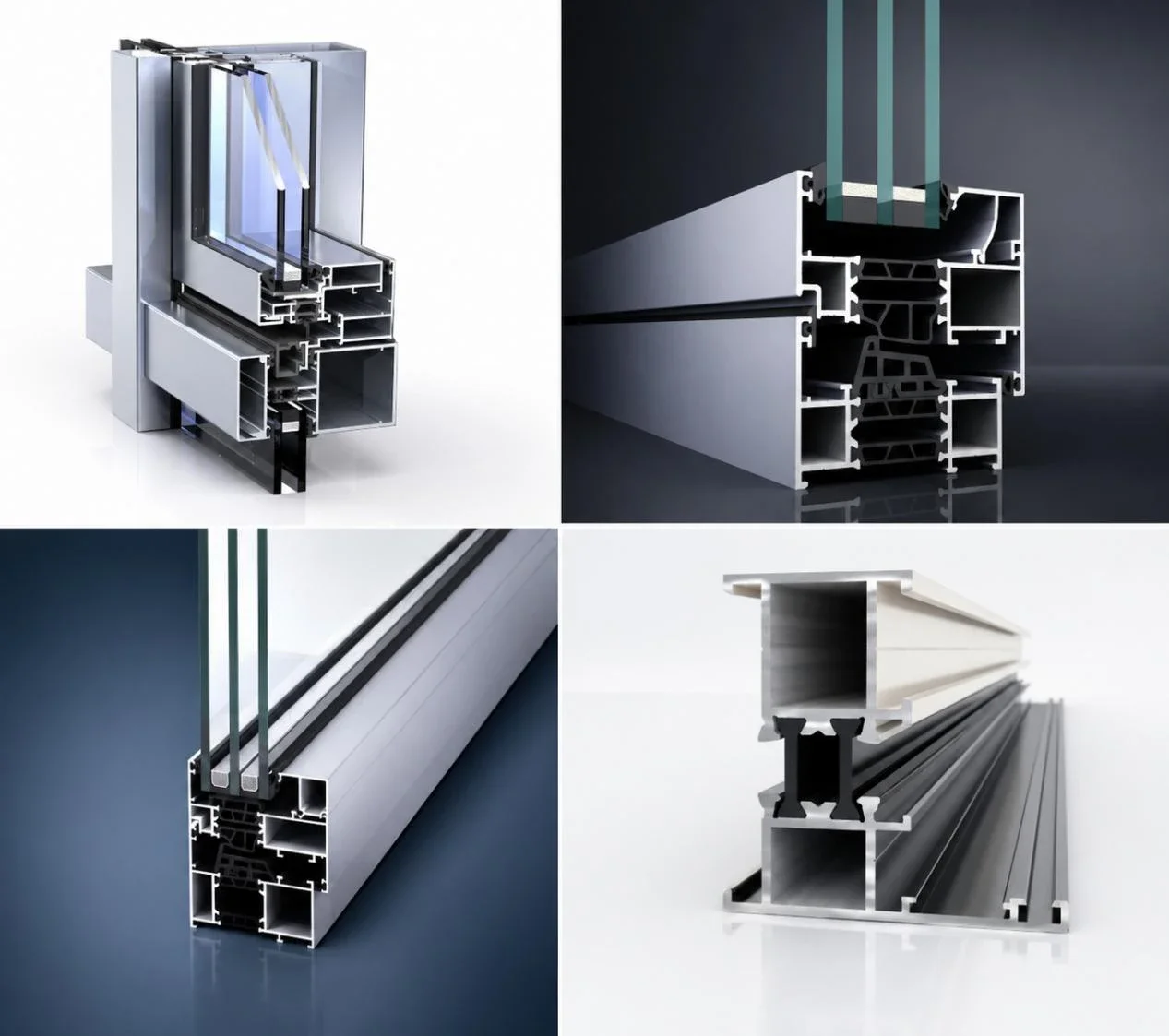
Thermal break aluminum profiles are commonly used for energy-efficient windows, doors, curtain walls, and other building systems where improved insulation performance is required.
Unlike standard aluminum profiles, thermal break profiles are made by combining aluminum sections with insulating polyamide strips. This process reduces direct heat transfer through the aluminum frame and improves the overall thermal performance of the finished product.
The production of thermal break profiles mainly involves three important steps:
● Polyamide strip insertion
● Profile rolling and crimping
These processes work together to create a strong mechanical connection between the aluminum profiles and insulation strips.
How Does the Thermal Break Assembly Process Work?
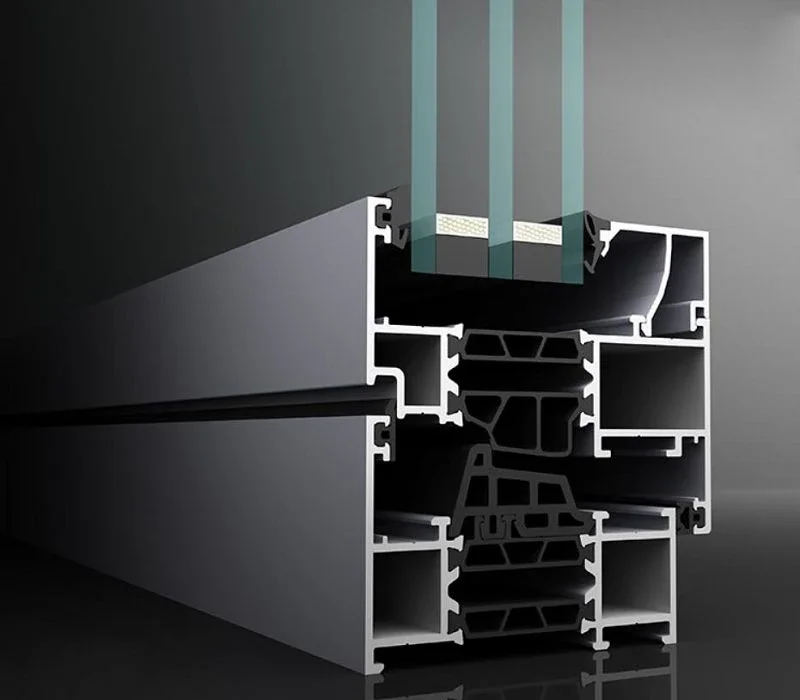
The thermal break assembly process is a mechanical production method used to combine aluminum profiles with PA66 GF25 polyamide insulation strips.
During production, the aluminum profile grooves are first prepared, then the insulation strips are inserted and finally locked into position through the rolling process.
A properly controlled assembly process helps manufacturers produce profiles with:
● Stable mechanical strength
● Consistent profile quality
● Reliable thermal insulation performance
1. Aluminum Profile Knurling
Preparing the Aluminum Groove Surface
Knurling is the first stage of the thermal break assembly process.
During this step, special knurling wheels create a serrated surface inside the aluminum profile grooves. This roughened surface increases the contact area between the aluminum profile and the polyamide strip.
The purpose of knurling is to:
● Improve the mechanical grip between aluminum and insulation strips
● Prevent movement between connected parts
● Increase the stability of the finished profile
The quality of the knurling process has a direct influence on the strength of the final thermal break profile.
2. Polyamide Strip Insertion
Installing the Thermal Insulation Strip
After knurling, PA66 GF25 polyamide strips are inserted into the prepared aluminum grooves.
Polyamide strips are widely selected for thermal break profiles because they provide:
● Low thermal conductivity
● Good mechanical strength
● Dimensional stability
● Long-term durability
During strip insertion, accurate positioning is important to keep the aluminum sections properly aligned.
A stable insertion process helps avoid problems such as:
● Uneven strip positioning
● Profile deformation
● Poor connection quality
3. Profile Rolling and Crimping
Locking the Aluminum Profile and Insulation Strip
Rolling is the final stage of the thermal break assembly process.
During rolling, pressure rollers compress the aluminum grooves around the polyamide strips. This creates a secure mechanical connection between the aluminum sections and the insulation material.
The rolling process affects:
● Connection strength
● Profile accuracy
● Final product quality
For automated thermal break assembly machines, servo-controlled systems can adjust roller movement and pressure according to different profile designs and specifications.
Why Is the Thermal Break Assembly Process Important?
The assembly quality determines the performance of the finished thermal break aluminum profile.
A precise production process helps manufacturers achieve:
Improved Thermal Performance
The polyamide strip separates the inner and outer aluminum sections, reducing heat transfer through the frame.
Strong Mechanical Connection
Proper knurling and rolling ensure that the insulation strip remains firmly fixed inside the aluminum profile.
Consistent Production Quality
Automatic control systems reduce manual errors and help maintain stable production results.
Automatic Thermal Break Assembly Machines for Production
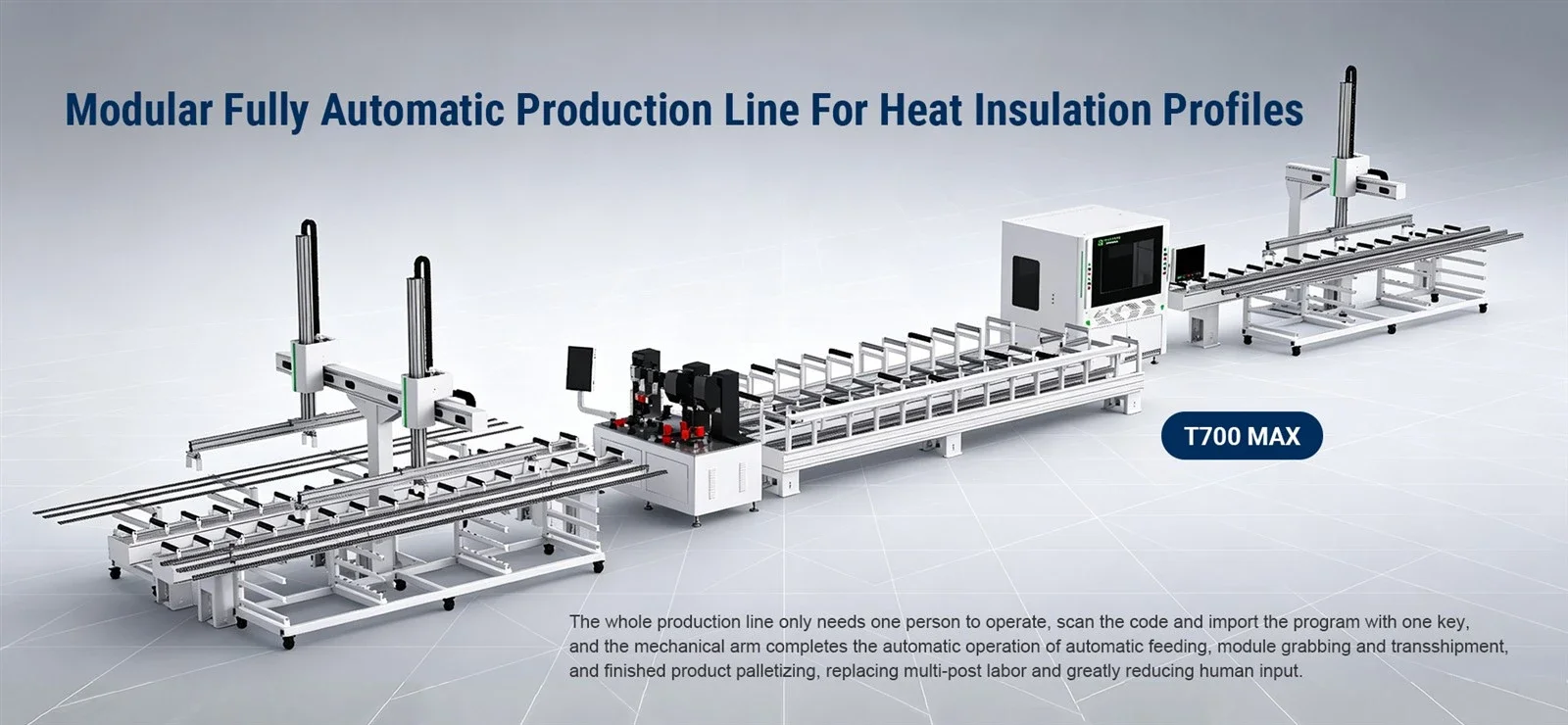
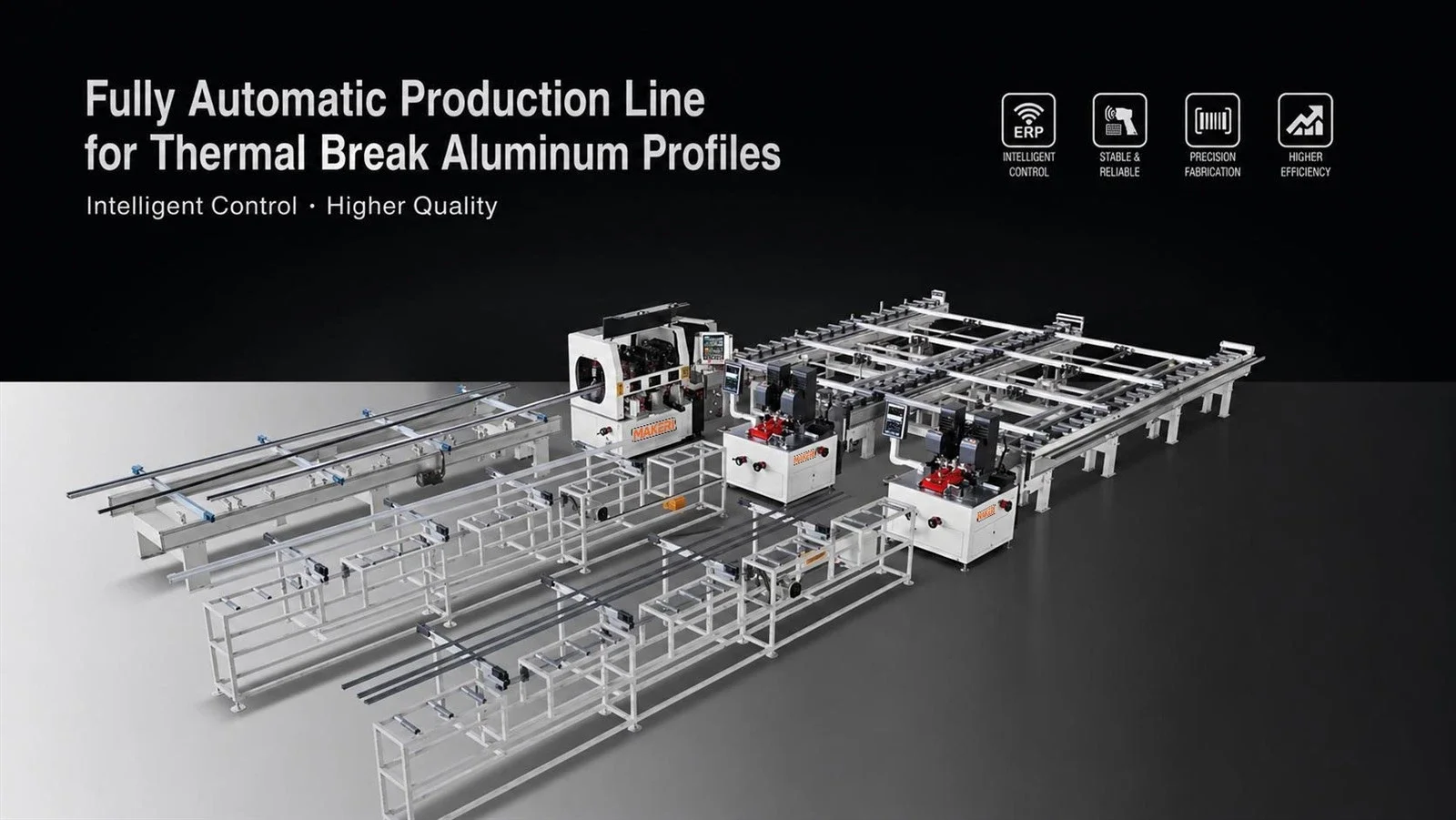
For aluminum profile manufacturers, an automatic thermal break assembly machine combines multiple processing steps into one production system.
A complete thermal break assembly line can integrate:
● Knurling
● Polyamide strip insertion
● Profile rolling
Compared with separate manual operations, an automated system can help manufacturers:
● Increase production efficiency
● Reduce labor requirements
● Improve processing consistency
● Simplify production management
MAKERL thermal break assembly machines are developed for manufacturers producing aluminum profiles for windows, doors, curtain walls, and other applications.
Applications of Thermal Break Aluminum Profiles
Thermal break aluminum profiles produced through this process are commonly used in:
● Aluminum doors and windows
● Curtain wall systems
● Energy-efficient buildings
● Passive house projects
● Commercial and residential construction
Conclusion
The thermal break assembly process is an important stage in producing insulated aluminum profiles. Through knurling, polyamide strip insertion, and rolling, aluminum sections and insulation strips are combined into a finished thermal break profile.
For manufacturers, selecting a suitable thermal break assembly machine is important for maintaining production efficiency, profile quality, and long-term equipment reliability.
The original article is from: https://www.makerlcnc.com/info/thermal-break-assembly-process-103602392.html
GBA Detail Library
A collection of one thousand construction details organized by climate and house part

Replies