Bath Fans Can Make Indoor Humidity Worse
A bathroom exhaust fan removes moisture after a shower—but during mild, humid weather it can also pull even more moisture into your house

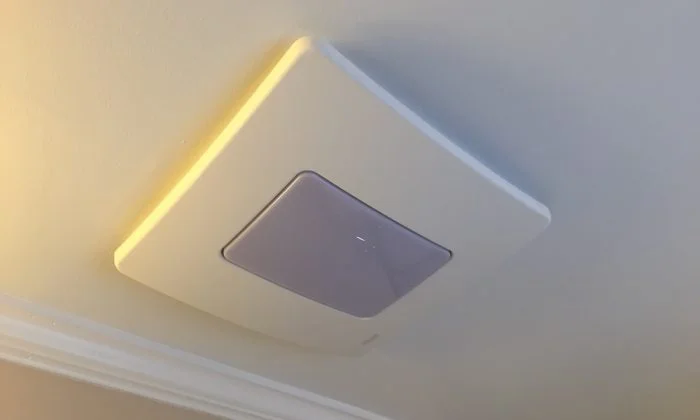
Bath fans are a big topic in building science. How do you get good airflow through them? Should you insulate the duct? Is it OK to use an ERV extract vent instead? Can they work as part of a whole-house ventilation system in every climate? Today I bring you another one: Will your bath fan make your indoor humidity worse?
The most difficult weather for humidity control
We’ve been having cloudy, humid weather recently here in Atlanta. Some days the temperature gets high enough that the air conditioner runs enough to do some dehumidification. Other days (screenshot below), the temperature is in the 70s or low 80s Fahrenheit, and the AC doesn’t run much. As I write this, the temperature is 70°F (21°C) and the dew point is going to be between 63°F and 66°F (17°C and 19°C) today. That’s cool and sticky.

Those are the days when it’s hard to keep the indoor humidity below 60%. And when they go on and on—as you see above in our forecast for the next nine days—the indoor humidity can keep growing. (If you’re not familiar with Celsius temperatures, 23°C equals 73°F and 32°C is 90°F.)
There is a way to keep the indoor humidity low, of course. You can do it with a dehumidifier, a related topic we discuss a lot in building science. But today we’re focusing on bath fans.
Bath fan controls can make things worse
When I moved into my house in 2019, I changed the bath switch from a simple on/off switch to one that detects humidity and comes on when the humidity is above a threshold. You can change the threshold, but if you live in an old, leaky house, you may have to set it so high that it doesn’t do much good.

That’s what happened in my case. On the days with weather like we’re having now, it would come on a lot. I’d frequently go into the bathroom and find it running when no one had taken a shower in many hours. And all that bath fan runtime meant drawing even more humid air into the house.
So I eventually changed the switch. Now I use the countdown timer switch on the right in the photo above. I turn it on for 10, 20, 30, or 60 minutes at a time. But if you’d prefer shorter or longer intervals, they’re available too. Leviton sells them with maximum time intervals anywhere from 15 minutes to 12 hours.
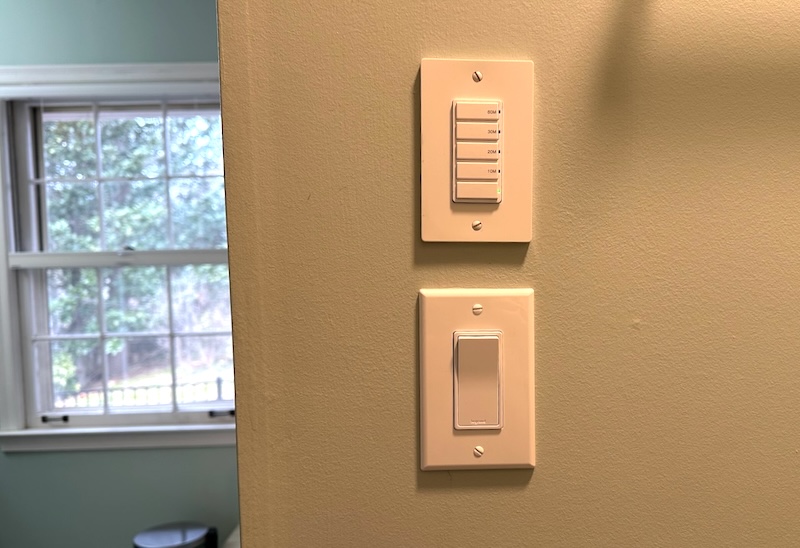
The countdown timer switch has worked well for me, but now that I have my Zehnder energy-recovery ventilator (ERV) installed, I use it too. The ERV runs continuously at a low airflow rate but boosts up to a higher rate when I push that boost switch below the countdown timer. When the outdoor weather is hot, humid, or cold, I use the ERV boost. When we have open-the-windows weather, I use the bath fan. This strategy works better than the humidity-sensing bath-fan switch.
You may not even need bath fans some days
Then there’s the issue of using the bath fan on hot, humid days. The air conditioner runs a lot because of the heat, so you may not need the bath fan at all, or not for long anyway. And if you happen to live in a super-humid climate, like Corpus Christi or Savannah, running the bath fan at all may bring more humid air into the house than you’re exhausting from the bathroom.
If the bathroom is at a temperature of 75°F (24°C), for example, and the relative humidity gets up to 100%, the dew point is 75°F. In those super-humid places, the dew point often gets higher than that, so you would definitely be making the house more humid overall. See my article on this topic for more detail.
The upshot here is that the bath-fan switch—and how you use it—can affect your indoor humidity in a negative way. So be careful with those bath fans and their controls.
Allison A. Bailes III, PhD, is a speaker, writer, building science consultant, and the founder of Energy Vanguard in Decatur, Georgia. He has a doctorate in physics and is the author of a bestselling book on building science. He also writes the Energy Vanguard Blog. For more updates, you can follow Allison on LinkedIn and subscribe to Energy Vanguard’s weekly newsletter and YouTube channel.
Weekly Newsletter
Get building science and energy efficiency advice, plus special offers, in your inbox.


