The Case for Home Ventilation Specialists
As homes become tighter and ventilation requirements more complex, the HVAC industry faces a growing problem: Nobody truly owns residential ventilation.

More Building Science


You’d think that HVAC companies would have this locked down. The V in HVAC, after all, stands for ventilation. But ventilation falls below duct systems for many contractors. And duct systems are below what’s in the box that makes the heating or cooling (e.g., heat pump, furnace, or boiler). With many states now mandating whole-house ventilation systems, though, we need a class of worker in the HVAC industry: home ventilation specialists.
The term “ventilation” can mean a variety of things. Here I’m talking primarily about mechanical ventilation in a home, excluding radon mitigation, which does have its own specialists. That includes exhaust fans in bathrooms, kitchens, and garages as well as whole-house ventilation systems.
The problem: Ventilation is nobody’s job
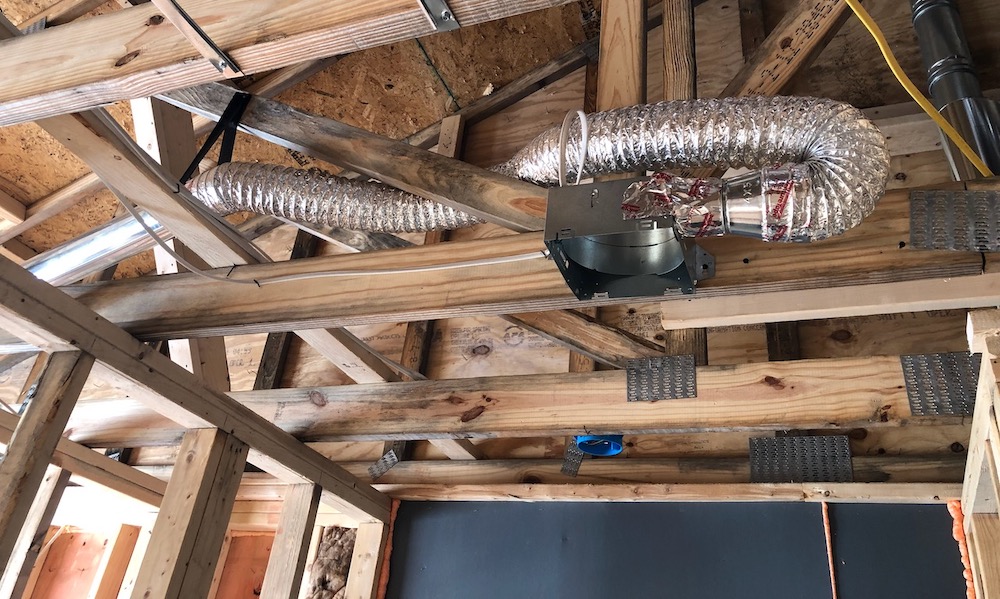
Let’s start with bath fans. In many new homes, electricians install the housing. Since they don’t install the duct, they have a 50/50 chance of pointing it in the right direction. The photo below shows one of the many wrong choices I’ve seen.
Last year, Martin Holladay, the former editor of Green Building Advisor, asked a bunch of us in the industry about why we thought the HVAC industry was such a mess. (You have to be a GBA Prime member to read the full article, but it and the follow-up about solutions are great. GBA is a great resource, though, and worth the membership.) Here was part of my response:
An HVAC tech has to have a huge amount of knowledge to do their job. Here’s a list of a few things they need to know: basic skills like tool use, soldering, brazing, etc.; framing basics, like when you can and cannot cut a framing member or how big a hole you can cut; plumbing basics for condensate lines or hydronic distribution; electrical wiring, measurements, setting DIP switches, etc.; measuring and adjusting refrigerant levels in ACs and heat pumps; venting combustion appliances safely; dealing with gas, oil, and propane safely; troubleshooting malfunctioning equipment; air flow, pressure measurement, ductwork, etc.
Notice that I didn’t mention anything about ventilation. That’s because most companies don’t make it a priority. There are too many other things they see as more important. When they have to do ventilation, they do what they can with the skills they have.
The result is ventilation systems that don’t work well. Bath fans often move about half the air they should. In the case of more complicated systems like energy-recovery ventilators (ERVs), the mistakes are numerous. Robert Jordan of Achieve Home Energy Advisor in Massachusetts told me recently that every ERV installation he sees has problems, some of them serious. (See this article I wrote about some photos he sent me.)
Why we need home ventilation specialists
Ventilation is part of building science, indoor air quality, and HVAC. The standards and codes that govern it can be complex. They’re also frequently misapplied. People and companies who specialize in ventilation will have a comprehensive understanding of all these issues and know how to apply them.
In addition, a home ventilation specialist needs to know the local climate, the homeowners’ needs, different ventilation strategies, the range and types of equipment available, the various ways to move the air, and more. Should you go with an ERV or a ventilating dehumidifier? Or would a central fan-integrated supply system be better because of its lower upfront cost? Should you go with independent ventilation ducts or tie them in with the heating and cooling ducts?
When ventilation systems don’t get designed, installed, commissioned, or maintained properly, serious problems can follow: moisture problems that lead to rot and mold, indoor air pollutants that linger in the home, wasted energy from ventilation systems that run but don’t actually do anything because no one knows there’s a problem. And on and on.
The truth is that ventilation is too important and too complex to leave to workers who don’t understand the intricacies and for whom it’s a low priority.
The market failure
Architects, builders, and HVAC contractors sometimes see ventilation as an add-on service. Often, however, it’s just one of those things they have to do to check a box on their list and get paid. It’s kind of like having to watch an ad so you can see the full video you want to see on YouTube.
Another problem with the market is there’s no trade identity for home ventilation specialists. There’s also no clear credential that tells customers, “This is the person you need.” And there’s certainly no licensing of ventilation pros.
Because of those deficiencies, homeowners don’t even know to ask for it. Worse, they often don’t know they need it. A home with a malfunctioning ERV might be running and using energy, as I mentioned above, without coming close to doing what it should.
What home ventilation specialists would do
Below is a list of the things ventilation specialists would do. Some of these tasks could and probably should be split among different people and perhaps different companies. Similar to my longstanding plea to separate design from installation in heating and cooling, design might be best separated from installation in ventilation too. Here’s the list.
Design – Ventilation designers should have the most comprehensive knowledge of anyone in the ventilation industry. They’re the ones who use their overall understanding of ventilation, code requirements, homeowner needs, and equipment capabilities to come up with a design and specifications that will work. And they’ve got to be masters of the ASHRAE 62.2 residential ventilation standard and how it’s implemented in the International Residential Code.
Installation – The installer should first RTFM (read the friendly manual). Relying only on the design documents might get them in trouble, especially if they’re installing equipment they’re not familiar with.
Commissioning – The one commissioning could be the same person who installed the system, but they’ll need some additional tools and skills.
Maintenance – Some homeowners are capable of and interested in maintaining their own stuff. Many aren’t. Without someone to come and change filters, check for proper operation, and look at basic indoor air-quality metrics, ventilation systems can go south in a hurry.
Assessment of existing systems – I called out assessment separately, but it could be done by the same person or company that does maintenance.
The path forward
Residential ventilation is an unclaimed niche in the HVAC market. I’d love to see a lot of HVAC companies with home ventilation specialists on their staffs. Building codes have done wonders for improving airtightness, but they aren’t going to make HVAC companies better at ventilation. Duct systems might meet the duct leakage requirement, for example, but still move the wrong amount of air and be too noisy.
That leaves a huge opportunity for companies willing to invest in the skills and tools to take command of this niche. You don’t need to be a licensed mechanical contractor to install ventilation systems, at least not in most places. What could be useful, though, is to have a nationwide credential that lets everyone know you’ve got the training and the skills to be a home ventilation specialist.
This may be difficult to pull off in rural areas or states with building codes that don’t require much for ventilation. Even in some larger areas, the local code requirements will make a difference. But there are complementary services a ventilation contractor could offer to support their growth. High-efficiency filtration installation and retrofits would be a great add-on. So would IAQ assessments.
And speaking of IAQ, even though I’m focusing on ventilation here, you need to remember that it’s only one part of achieving good indoor air quality. The others are all fair game too.
I’ve been talking about this for years, and I hoped I would see companies specializing in ventilation popping up all over the country. I’m still waiting. The unclaimed market is still waiting. Are you ready to claim it?
Allison A. Bailes III, PhD is a speaker, writer, building science consultant, and the founder of Energy Vanguard in Decatur, Georgia. He has a doctorate in physics and is the author of a bestselling book on building science. He also writes the Energy Vanguard Blog. For more updates, you can follow Allison on LinkedIn and subscribe to Energy Vanguard’s weekly newsletter and YouTube channel.
Weekly Newsletter
Get building science and energy efficiency advice, plus special offers, in your inbox.