Wildfire Smoke and IAQ: What Can Be Done?
Wildfire smoke can quickly turn healthy indoor air into a hidden health hazard. Here's how to monitor PM2.5, reduce smoke infiltration, and improve indoor air quality during smoke events.

More Building Science


Editor’s note: We first published this article in 2025 when wildfire smoke from Canada blanketed large portions of the United States. Because the information remains relevant—and, unfortunately, timely as poor air quality once again affects much of North America—we’re republishing it with minor edits and updates.
I’m pretty much an indoor air quality (IAQ) nerd; I own four different indoor air-quality monitors plus a radon monitor and portable CO and CO2 monitors. I frequently check the EPA AirNow app that’s downloaded to my phone, and I’m considering purchasing my own outdoor IAQ monitor, just to finish off the collection. The past few days, they’ve all come in handy.
What they showed surprised me. Even with the windows closed, fine smoke particles were making their way into my home. Fortunately, there are several ways to reduce indoor smoke levels—and some are surprisingly inexpensive.
Wildfire smoke and the risks to our health
At a minimum, wildfire smoke is an irritant, but it can cause serious health problems for those at higher risk. Some of the pollutants present in wildfire smoke include fine particulate matter (PM2.5), carbon monoxide, volatile organic compounds, formaldehyde, and other gases and chemicals. Prolonged or repeated exposure can cause chronic respiratory diseases and a whole host of other health issues. The EPA has a lot more information on the topic on its website.
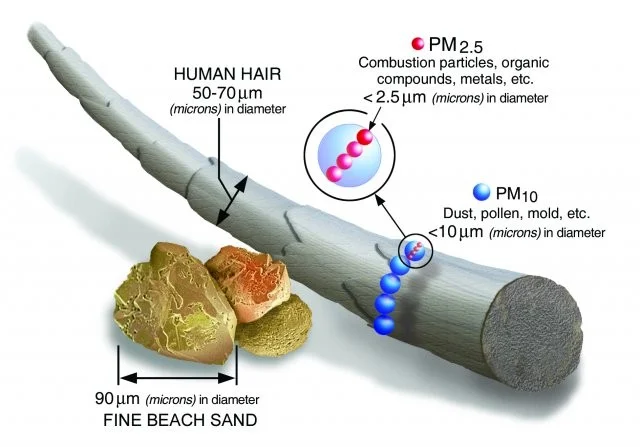
The biggest problem with wildfire smoke is PM2.5. These very small airborne particles can get stuck deep in our lungs, with some of the smaller particles bypassing our lung tissue and ending up directly in our bloodstream. The EPA recommends an annual average exposure limit of no more than 9 µg/m³ and a 24-hour average exposure limit of 35 µg/m³, which is not to exceed more than once per year on average over a three-year period. The World Health Organization suggests even lower levels. The good news is that PM2.5 can be monitored and filtered inside our homes.
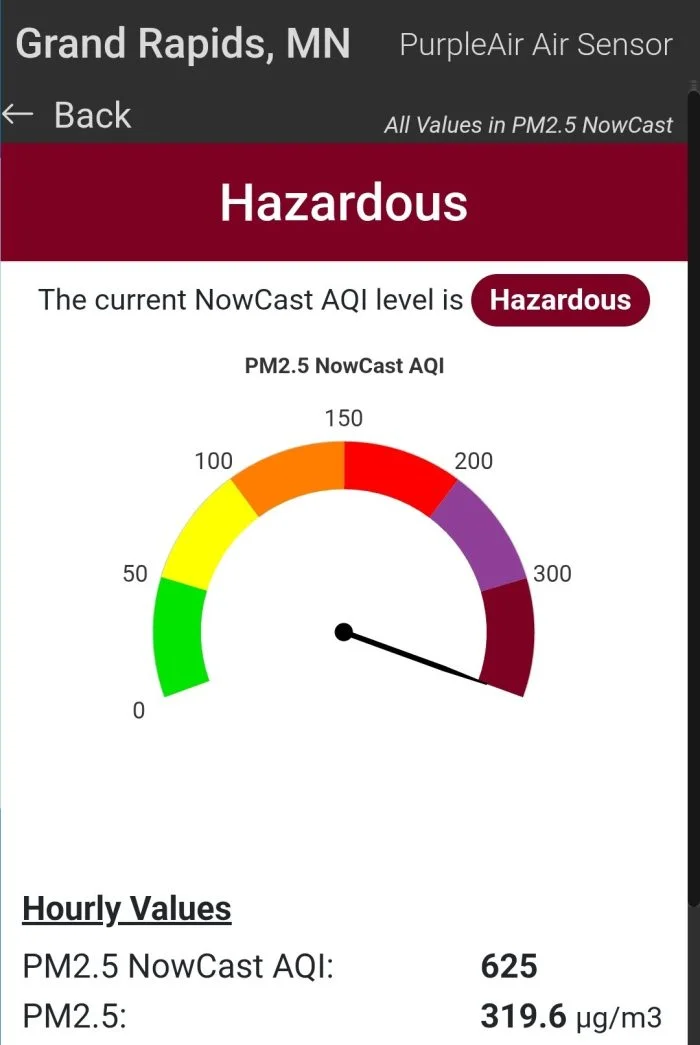
Before deciding what to do inside your home, it’s worth checking local outdoor conditions. The EPA’s AirNow app provides real-time air-quality information and smoke forecasts for most of the United States.
How the outside can get inside
My home is leaky, around 9 ACH50, which means that one-quarter to one-half of the volume of air inside my home is being exchanged with outside air every hour. As you might imagine, some of the PM2.5 particles are finding a way into my home.
A tighter home has an advantage; natural air exchange will be limited as long as all the windows are closed and exterior doors are not opened frequently.
Other ways for the outside to get inside are through balanced and supply only ventilation strategies, which use fans to force outdoor air into the home. If your HRV or ERV includes high-efficiency filtration designed for wildfire smoke, follow the manufacturer’s recommendations. Otherwise, many experts recommend temporarily reducing or disabling outdoor-air ventilation during severe smoke events while maintaining indoor filtration.
I would also limit the use of exhaust equipment during smoke events. Bathroom fans, kitchen range hoods, and vented dryers all depressurize the house. As indoor air is exhausted, outdoor air is pulled in through leaks in the building enclosure, bringing smoke particles with it.
Monitoring IAQ
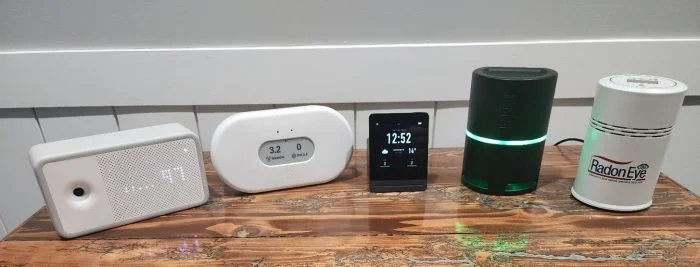
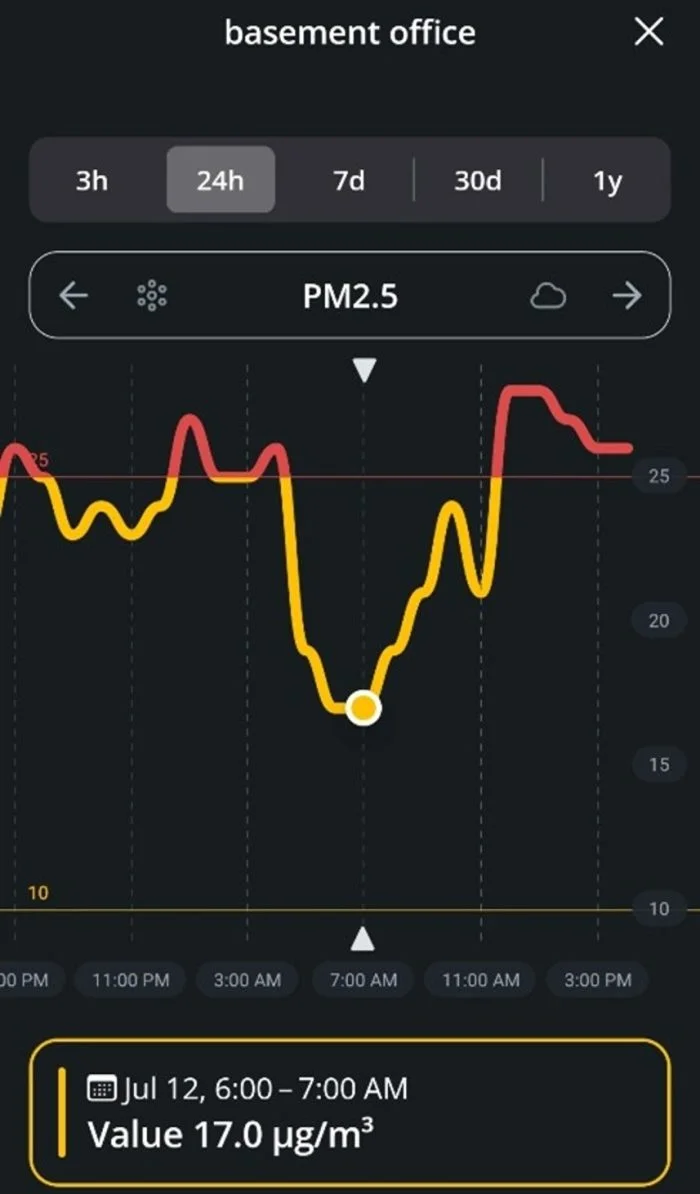
The only way to know the levels of PM2.5 (and other potentially harmful gases and chemicals) in the home is to monitor. Like I mentioned at the beginning of this article, I own four air quality monitors, of which three are operating in my home —the fourth is part of my energy audit/building investigation tool kit. Unless you have several monitors, I recommend monitoring the areas in which you spend the most time. My monitors are located in my bedroom, in the living room/kitchen area, and in my office. The images below show my PM2.5 readings during this latest bout of wildfire smoke.
This first PM2.5 reading is from my basement office and was taken with an AirThings View Plus. The 24-hour readings ranging from about 17 µg/m³ to nearly 30 µg/m³. Typically, my office’s PM2.5 reading is 2 to 3 µg/m³.
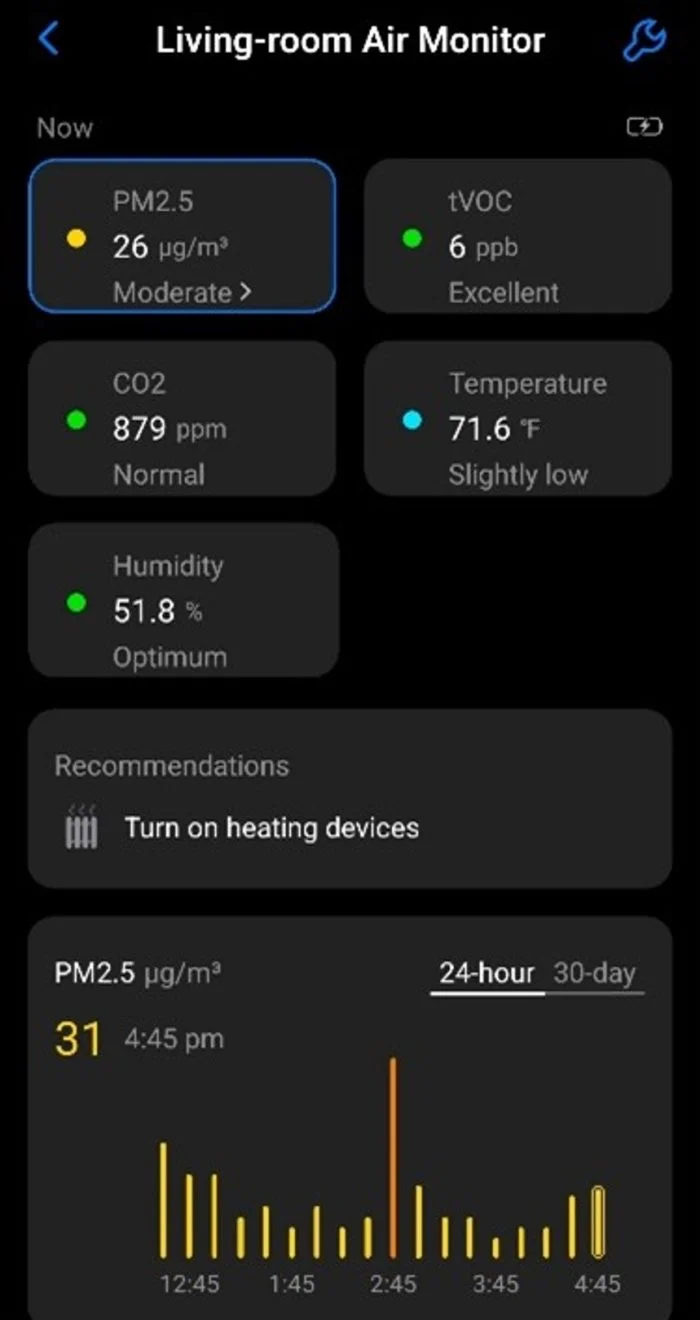
The next reading is from the living room/kitchen area; this meter is a Qingping. PM2.5 readings were as high as 31 µg/m³. Again, usually the reading in this area is in the low single digits. My significant other and I spend much of our evenings in this area. She is sensitive to poor air quality, mostly allergies, but she doesn’t feel well when wildfire smoke is present.
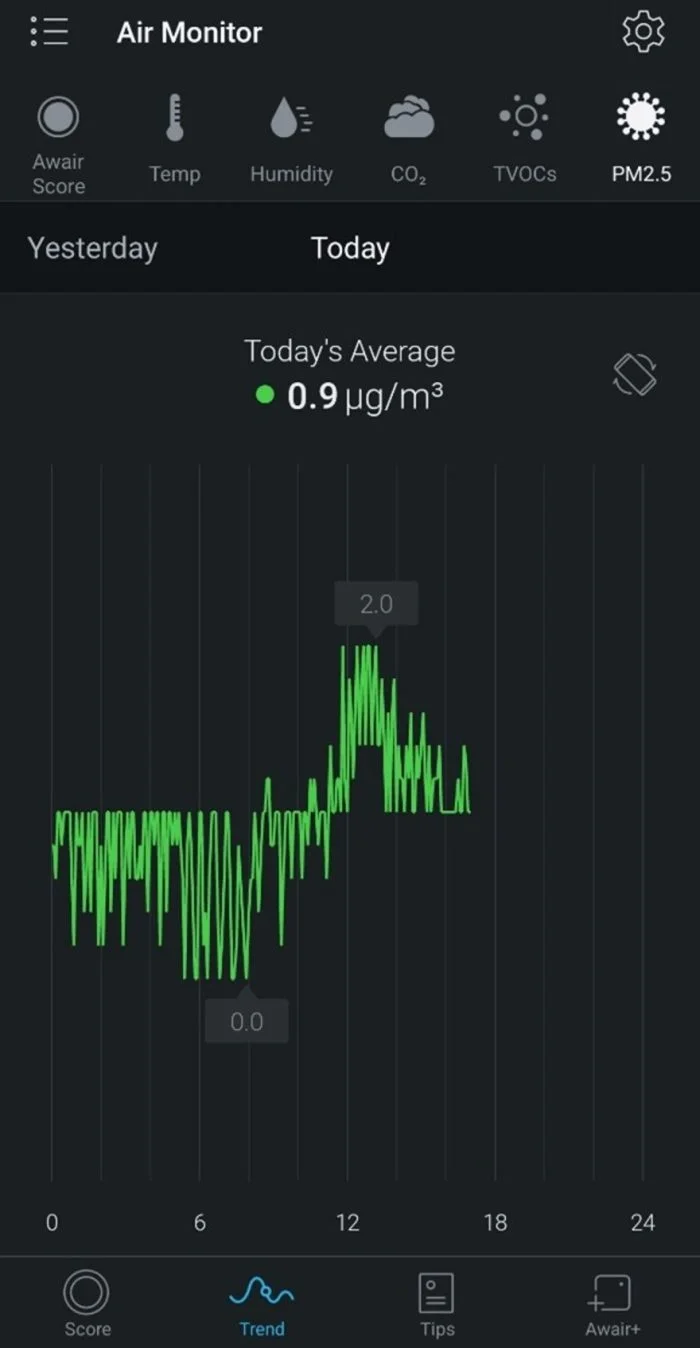
The last reading is from the AWAIR Element, which is located in the bedroom. This room had the lowest PM2.5 reading in the home, bouncing between 0 and 2 µg/m³. There’s a reason why this area has such a low reading, which I will get to in a bit.
Improving IAQ during wildfire periods
Once I knew I had elevated levels of PM2.5 in my home, I was able to take some action to greatly reduce the problem. We were already trying to limit the number of particles from the wildfire by closing the house up. We closed and locked all the windows, tried to limit opening doors to the outside, and did not turn on exhaust equipment. With my home being as leaky as it is, that only helped so much.
The primary strategy to improve IAQ during periods of poor outdoor air quality is to filter the indoor air. There are a few methods that can work; one is to install a really good furnace filter, something in the range of MERV 13, and operate the furnace fan continuously. There are a few drawbacks with this strategy. The first is that operating a furnace fan continuously during periods when air-conditioning is also on creates a reduction in the effectiveness of the AC to dehumidify the home. The furnace fan pushes much of the condensate that the AC has removed back into the indoor air.
Another issue is that many HVAC duct systems aren’t designed to handle the resistance of air moving through a MERV 13 filter. This type of filter is great at removing indoor pollutants but restricts the air moving across the AC coil, which can result in the coil freezing up. I’ve had this happen in my home when I try to use filters with high filtration levels.
One final issue with using a furnace and filter to remove indoor pollution is that some furnace fans use large amounts of energy. I’ve tested some that use in excess of 700 watts. In my market, this can add $75 per month to an electric bill.
Instead of operating my furnace fan to filter the air inside my home, I chose to build a couple of DIY filtration systems using an inexpensive box fan and filters that can be purchased at any big box store.
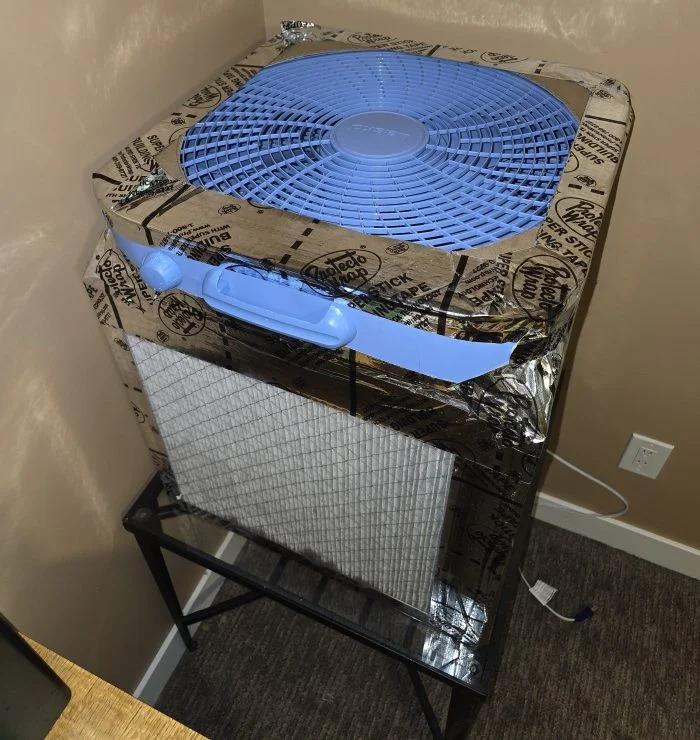
The first air filter is called the Corsi/Rosenthal air cleaner. I’m not going to get into how to build one, but Allison Bailes outlined the process in this GBA article from 2020. I built mine last summer for about $100. My unit operates continuously in my bedroom and is the reason for the low PM2.5 (0 to 2 µg/m³) readings while the rest of my home has elevated levels. The door to this room remains closed most of the time, isolating the space from the rest of the home.
If filtering the entire house isn’t practical, concentrate on one room where family members spend the most time—typically a bedroom or living room. A portable air cleaner operating continuously in a closed room can dramatically reduce PM2.5 exposure.
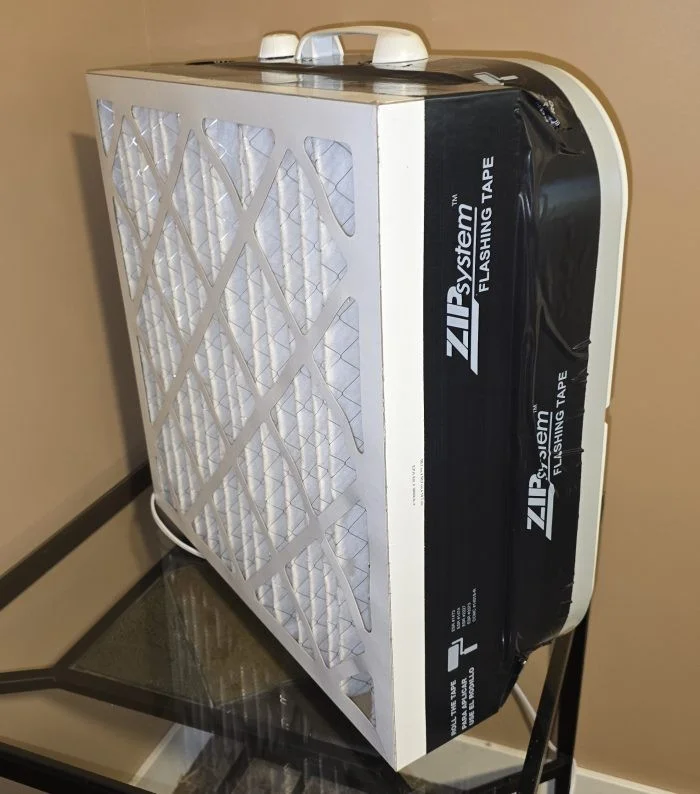
I used a simpler DIY filter system to help lower the level in my living room/kitchen area. I simply taped a 20-in. by 20-in. by 4-in. pleated filter to a 20-in. by 20-in. box fan. The filter is a HDX FRP 9 (the equivalent of about a MERV 12) I purchased at Home Depot for about $35. I have heard that using a box fan with a filter taped to the intake side can put a strain on the fan motor; my hope is the larger 4-in. filter will help reduce the wear and tear.
One final option is to simply purchase a manufactured air filtration device. I have to admit that these do look much better than the DIY versions. Commercial HEPA air cleaners are an excellent option. They can be very effective at removing fine particulate matter, although DIY Corsi-Rosenthal boxes often deliver similar performance at a much lower cost.
The DIY single filter and box fan worked
After starting the new box fan and filter combination, the PM2.5 levels in my living room/kitchen dropped from the high 20s µg/m³ to the high single digits over the course of about four hours. It’s been maintaining those levels even though the outdoor PM2.5 levels, according to the EPA AirNow app, have been around 60 µg/m³ (there is a formula for converting the AQI number the app provides to an estimated concentration of PM2.5 in µg/m³, but it’s a bit complex). Here is an estimated conversion table:
| AQI | PM2.5 (µg/m³) |
|---|---|
| 0–50 | 0.0–9.0 |
| 51–100 | 9.1–35.4 |
| 101–150 | 35.5–55.4 |
| 151–200 | 55.5–125.4 |
| 201–300 | 125.5–225.4 |
These affordable DIY filtration systems should provide a few years of air cleaning during wildfire events. Hopefully I’ll complete the renovation work on my home soon, which includes tightening the envelope, the addition of an ERV and prefilter system, and an update of my heating and cooling ductwork. Whether these steps are enough to maintain healthy levels for indoor air remains to be seen, but until then, I’ll operate my DIY air filter systems.
A decade ago, few of us thought much about wildfire smoke. Today, for many parts of North America, it’s becoming a regular part of summer. The good news is that we aren’t powerless. A tighter house, good filtration, and a way to monitor PM2.5 can make a remarkable difference in the air we breathe indoors. As with so many things in building science, the first step is understanding what’s happening. Once you can measure the problem, you can make informed decisions about how to solve it.
GBA editor Randy Williams is a recovering general contractor who performs energy auditing and building investigations in Grand Rapids, Minn. He teaches and speaks about building science topics around the country. Photos by the author unless otherwise noted.
Weekly Newsletter
Get building science and energy efficiency advice, plus special offers, in your inbox.