Photographer Ethan James Green’s Brooklyn Heights home pairs figurative art and antique furniture with a welcoming space for friends.
A Brooklyn apartment shaped by art and old furniture
The striking thing about Ethan James Green’s Brooklyn Heights apartment is the gap between its scale and its presence. The one-bedroom home measures just under 1,000 square feet, yet its Victorian, Arts and Crafts, and Jacobean furniture gives it the air of a grand country-house breakfast room. Art Nouveau lamps add a warm glow. The effect is a world away from Green’s best-known work, including his black-and-white
Dazed shoot with Kate Moss and a recent
Vanity Fair cover story with Carlos Alcaraz.
That contrast is more revealing than it first appears. Green’s photography is rooted in an attentive, empathetic view of people; at home, that interest takes the form of a collection of figurative paintings, many made in the 20th century. Raphael Soyer’s Social Realist portraits sit alongside tentative and unapologetic nudes, and images of people lost in thought. The apartment feels old-fashioned, but not detached from Green’s own sensibility.
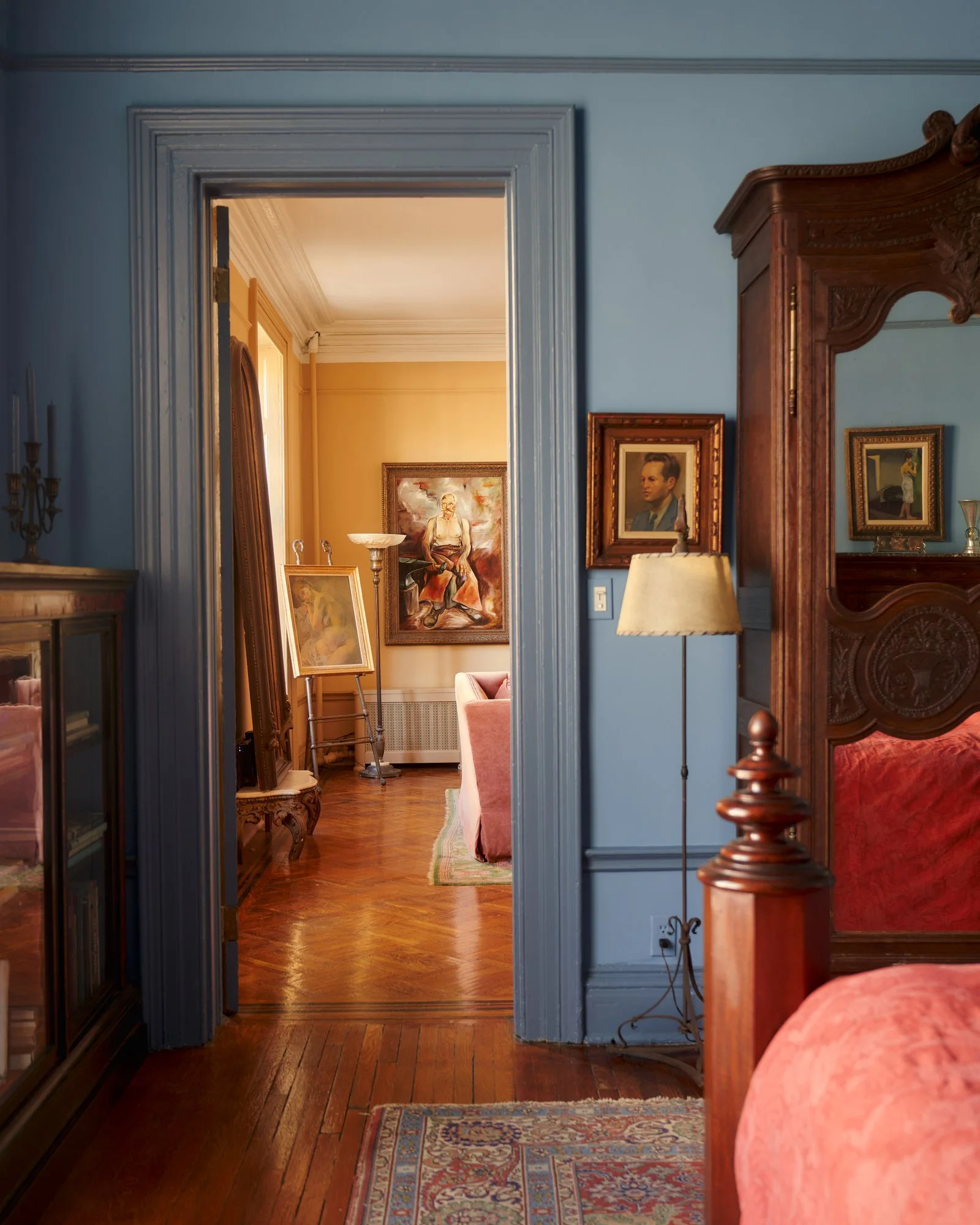
The view from the bedroom into the living room. Art by Raphael Soyer and Joseph Paul Vorst.
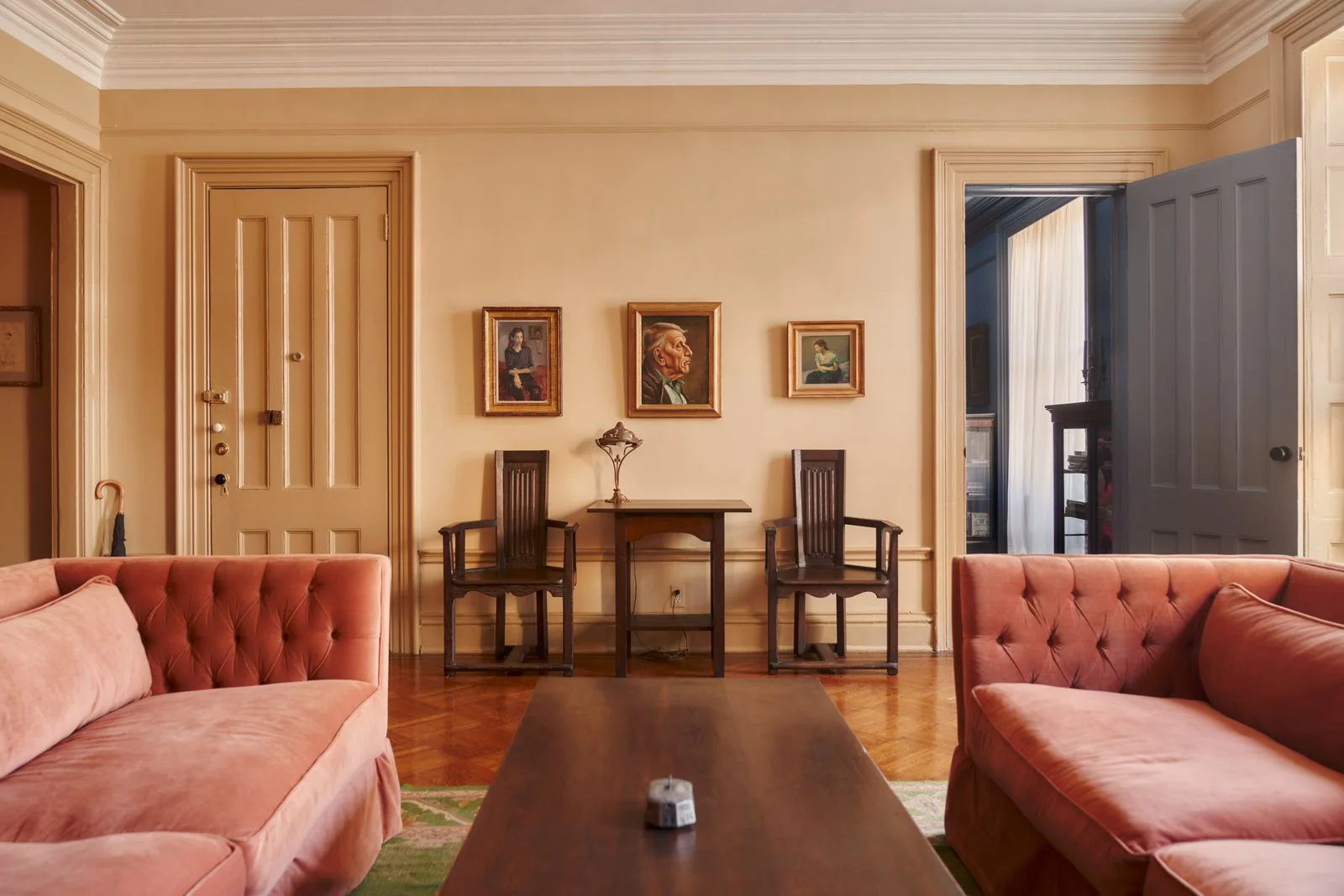
Raphael Soyer paintings flank a portrait by Thomas Hart Benton in the living room; the armchairs are by George Mann Niedecken. Art by Raphael Soyer; © T.H. and R.P. Benton Trusts / Licensed by Artists Rights Society (ARS), New York.
### A home built for company and looking closely
Green shares the apartment with a collection that keeps growing. He works with his friend Dylan Bailey, a New York artist and set designer he met on a shoot. Their process is loose: Bailey might leave paint samples for Green to consider, or stop by to hang a painting while Green is away working. They found the furniture at auction.
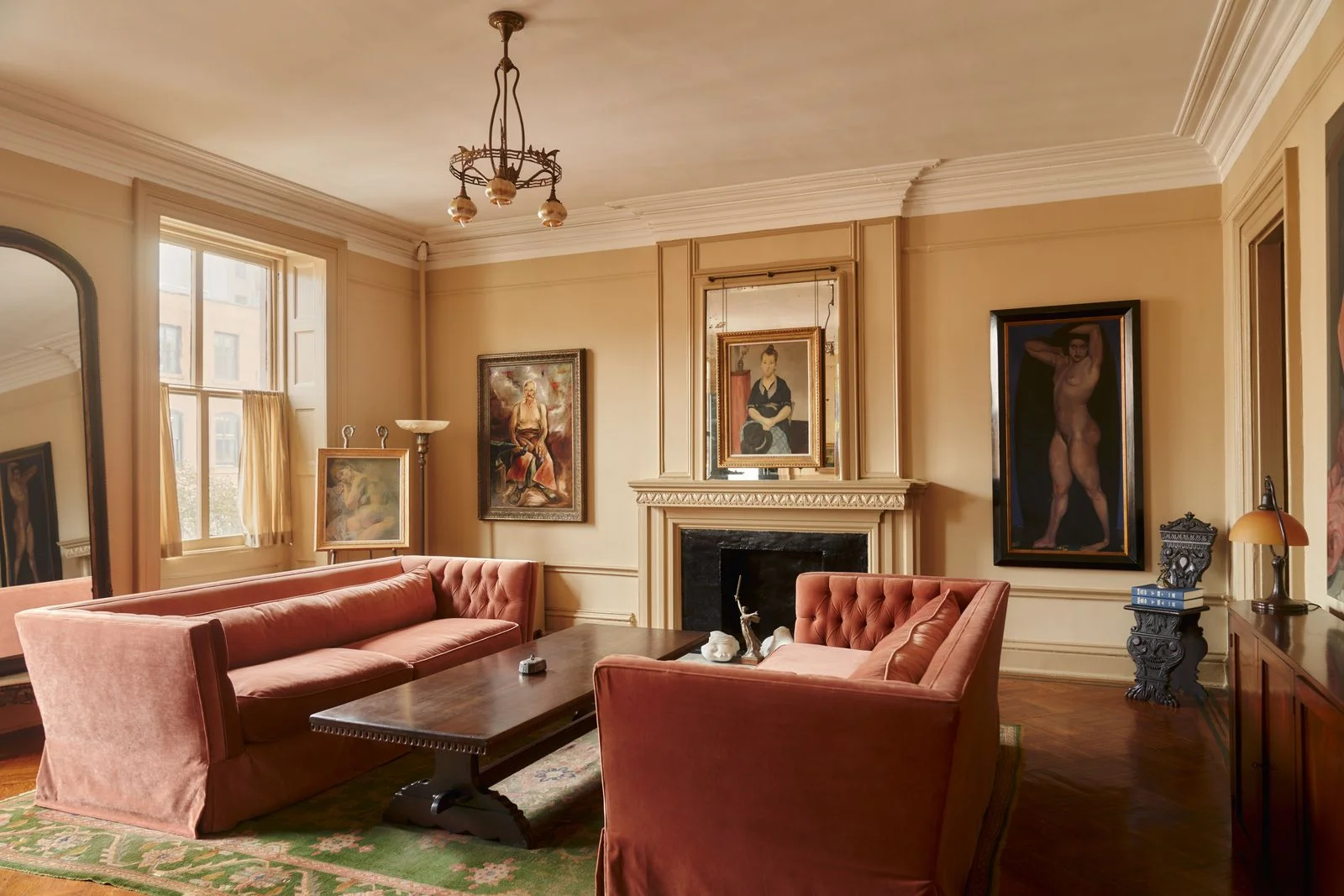
The sofas show how the room’s choices often connect by instinct. Green wanted matching couches where friends could settle in and talk. Their peach upholstery turned out to echo colors in several paintings, including Joseph Paul Vorst’s portrait of an ironworker and a double nude by George Valentine Dureau. “I didn’t realize until after getting them that the color showed up in several of the paintings,” Green says.
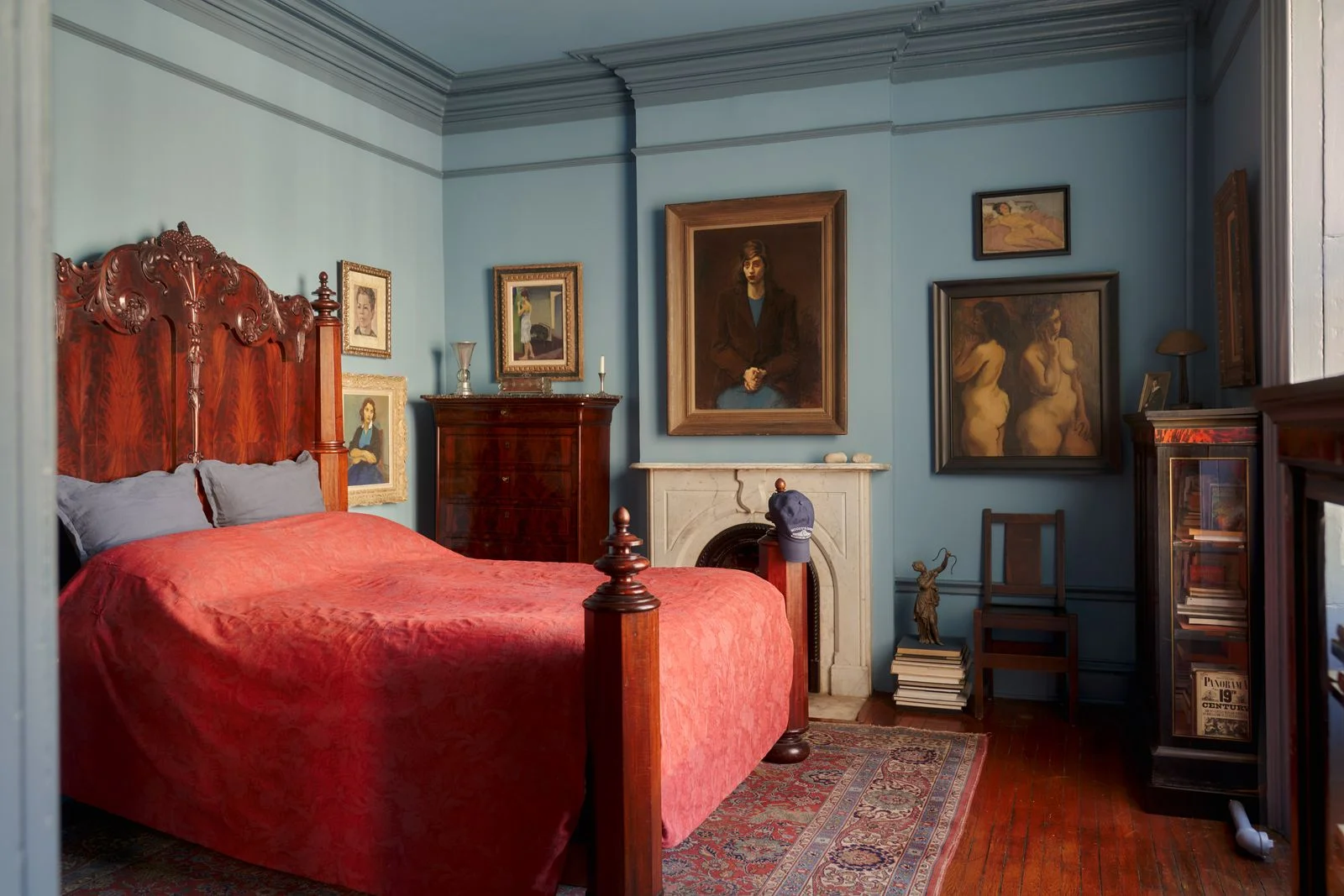
A Victorian Renaissance Revival bed sits with works by Maurice Grosser, Raphael Soyer, and Moses Soyer.
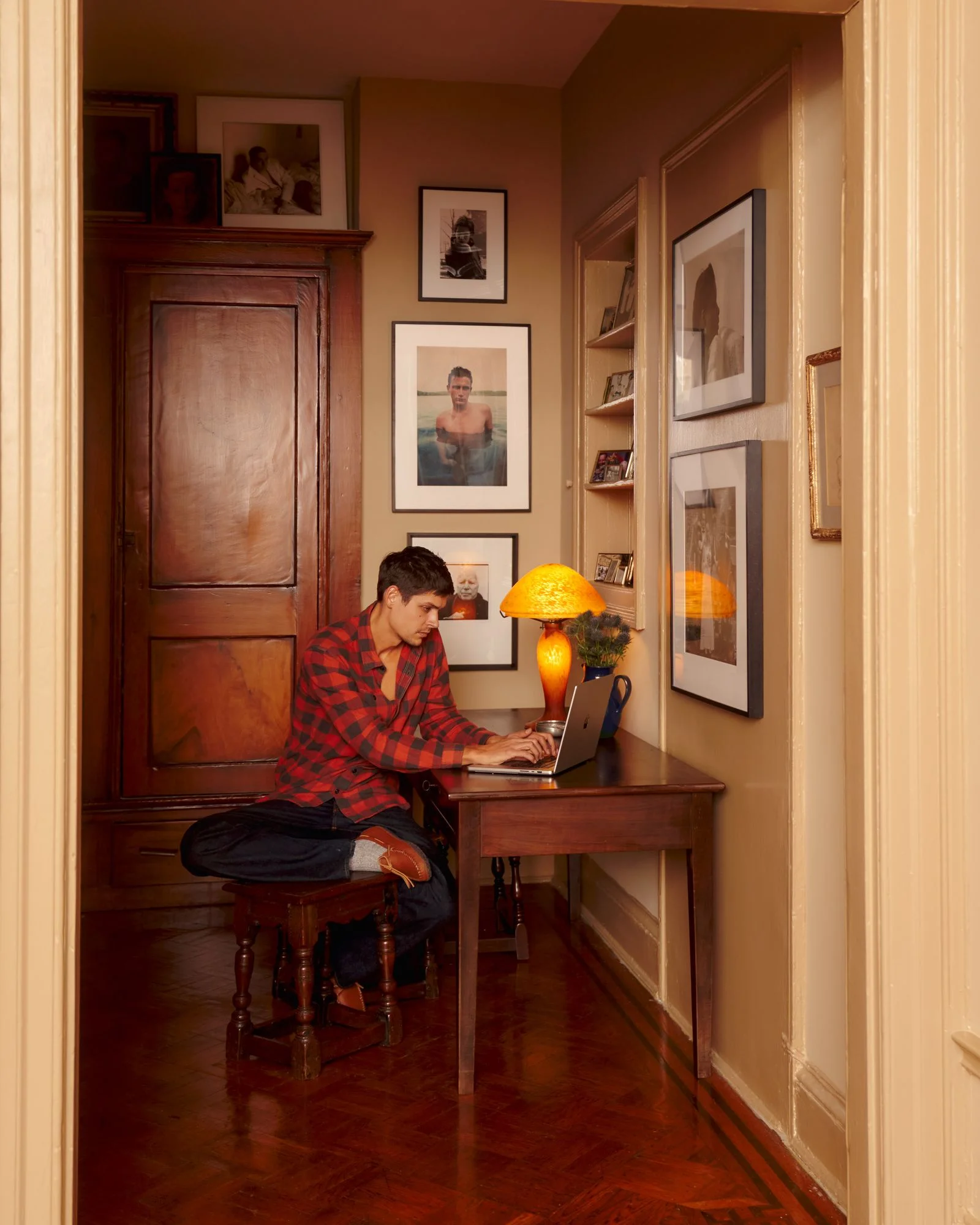
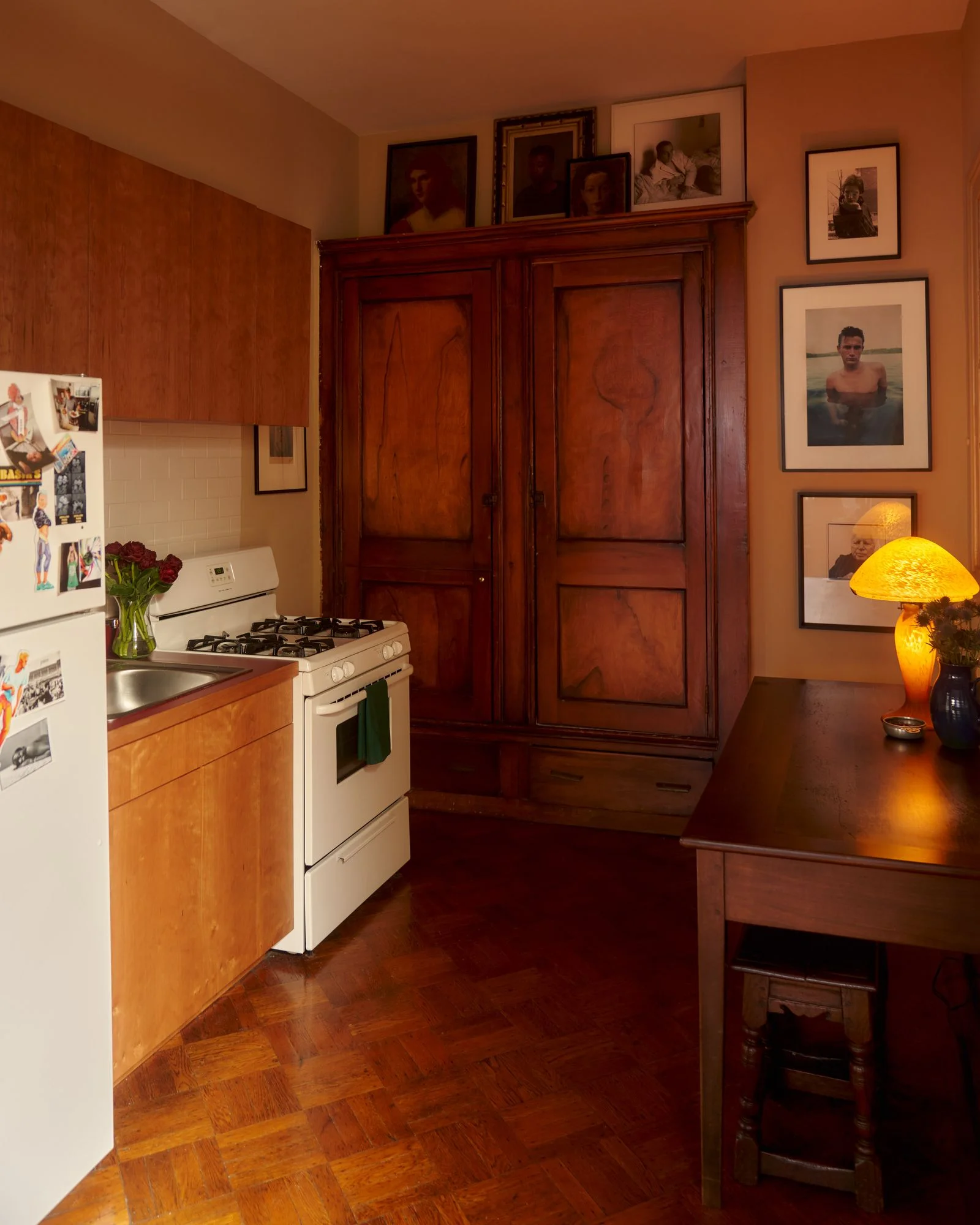
Green in the kitchen, surrounded by photographs. Art by Nan Goldin, David Armstrong, Richard Avedon / © The Richard Avedon Foundation, and Steven Cuffie.
Green’s own path to New York began far from the city. He grew up outside Grand Rapids, Michigan, among “cornfields and dairy farms.” His parents were missionaries, and the open days and wide skies left him room to imagine another life. At 14 or 15, he knew he wanted to be a fashion photographer; at 16, he discovered he could model. He moved to New York at 17, after becoming the first student at his high school to graduate online.
“I won the lottery. Modeling was a better way to learn than art school,” he recalls. His first year in New York, photographer David Armstrong took him under his wing. Green now divides his time between New York and Los Angeles with his boyfriend. In New York, he runs New York Life Gallery, which opened in 2022 and takes its name from the Chinatown insurance company across the street.
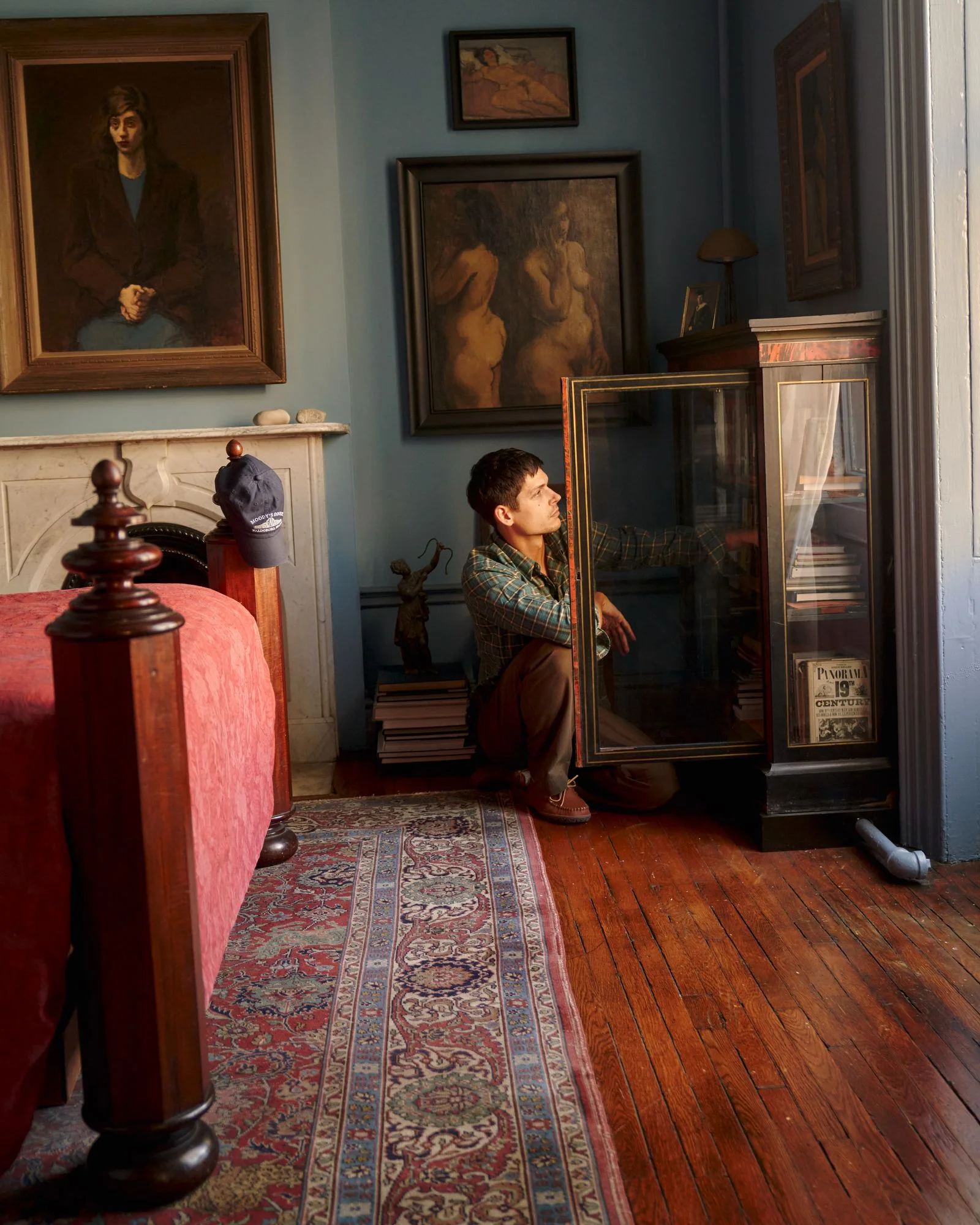
The gallery and the apartment are closely linked. Its first exhibition featured Baltimore photographer Steven Cuffie’s tender portraits of Black women. A 2023 show, “Sleeping Beauties,” brought paintings into the gallery that later found a home in Green’s apartment. In the bedroom, Green kneels beside a bookshelf by Renzo Mongiardino; the walls are painted a custom Benjamin Moore blue.
Green kneels before a Renzo Mongiardino bookshelf in the bedroom, painted a custom Benjamin Moore blue.
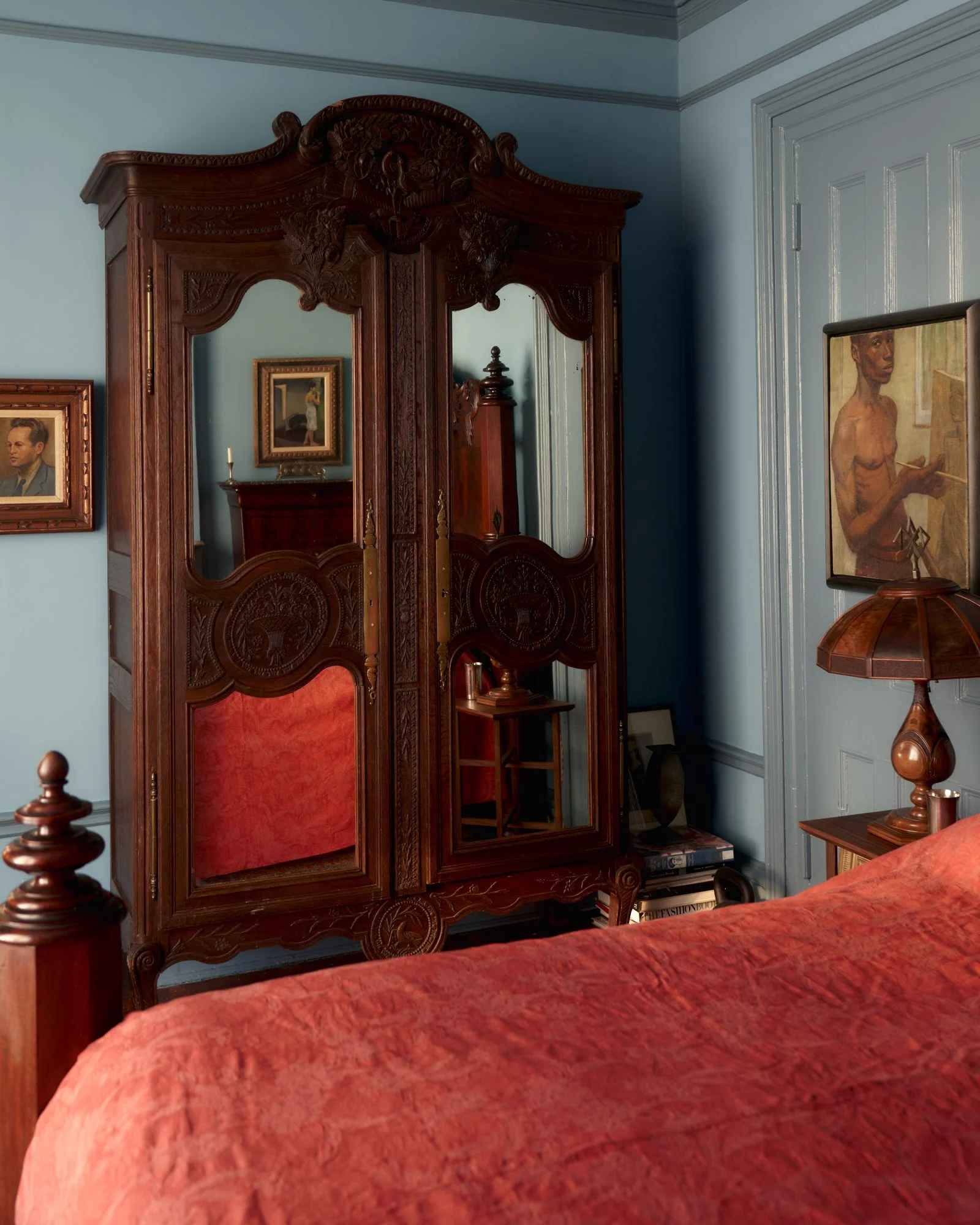
Raphael Soyer and Leroy E. Mitchell Jr. portraits flank a 19th-century French armoire, whose reflection catches another Soyer painting.
### The stories behind the paintings
The collection has led Green into the lives of the artists who made it. A 1949 self-portrait by Leroy E. Mitchell Jr. was the first painting he bought at auction. Before that, it had been found in a dumpster. Green researched Mitchell’s early years in Detroit, his circle of fellow artists, and his work as a teacher in Ghana.
Other purchases have revealed connections between artists. Green owns a painting by Thomas Hart Benton, whose 1931 mural of industrial workers hangs at The Met. As he kept collecting, he discovered that some of the painters knew one another: Benton and Vorst, for example, shared a studio. That history gives the apartment a second kind of coherence. Its paintings aren’t simply portraits of individual lives; together, they suggest a network of artists finding friendship and common ground.
An Austrian Art Nouveau chandelier hangs above the living room. From left, the paintings are by Raphael Soyer, Joseph Paul Vorst, Raphael Soyer, and Hermann Grom-Rottmayer; the walls are a custom Benjamin Moore color. Art by Joseph Paul Vorst, Raphael Soyer, and Hermann Grom-Rottmayer.
Green placed art atop the kitchen cabinets, including works by Raphael Soyer, Robert Philipp, and David Armstrong. To the right are photographs by Nan Goldin, David Armstrong, and Richard Avedon. Art by Raphael Soyer, Robert Philipp, David Armstrong, Nan Goldin, and Richard Avedon.
A collection built around people For photographer Green, collecting art is inseparable from the chance to connect with the people behind it. “I love paintings,” he says. Bailey used to joke that each visit brought another portrait looking for a place to hang. One ended up on the mirror above the mantel because Green had run out of wall space.
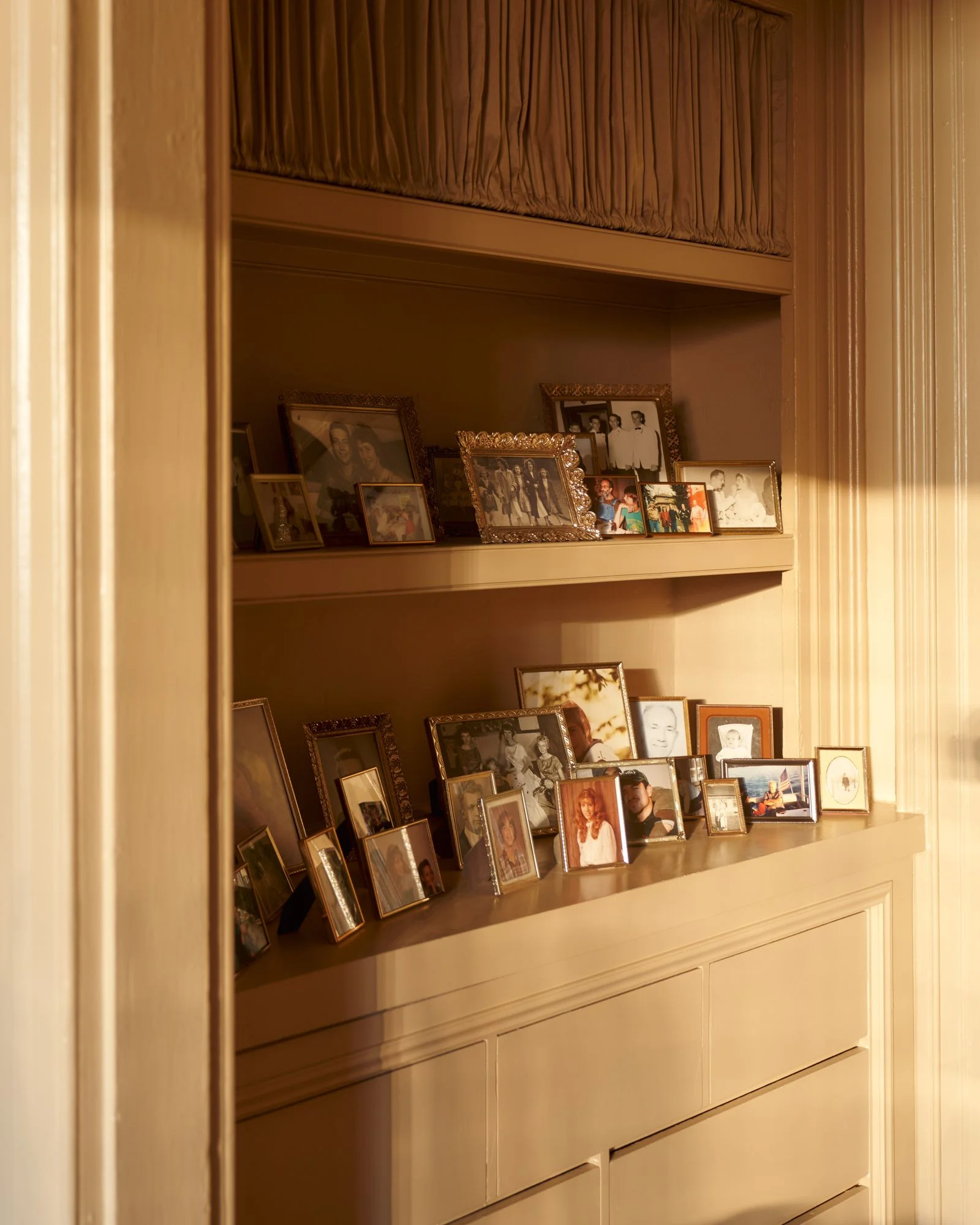
That crowded display gets at something more than a love of pictures. Green sees empathy as part of the work: “You cannot be a good photographer without being empathetic. I love people. I love faces.” His collection makes that affection visible, from the paintings to the family photographs lining the hallway shelves.
Framed family snapshots fill the hallway shelves